
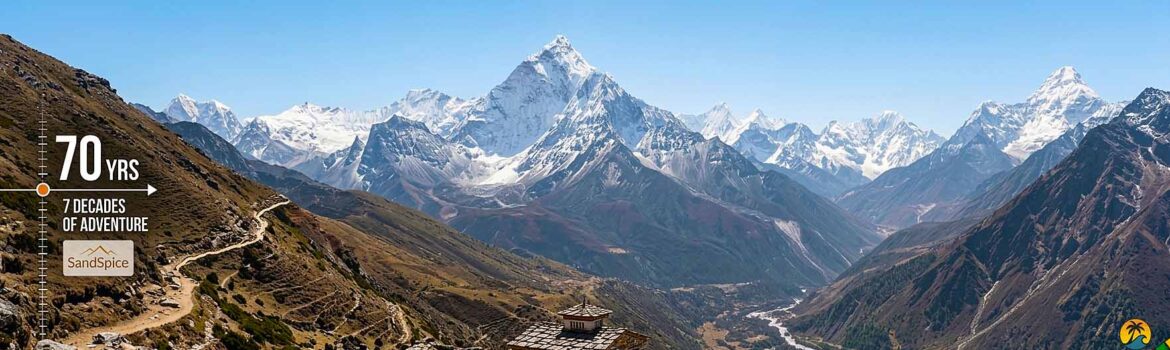
Embarking on the iconic Langtang Valley trek in Nepal requires a reliable trail blueprint, physical preparation, and an understanding of the region’s high-altitude challenges. This comprehensive trekking guide maps out the classic route from Kathmandu to the stunning 5,000-metre summit of Tserko Ri, breaking down the journey into manageable geographic milestones.
Whether you are navigating temperamental ATMs, acclimatizing near the historic teahouses of Kyanjin Gompa, or planning your daily packing checklist, our detailed series offers the practical strategies, up-to-date itinerary details, and route insights needed for this unforgettable Himalayan adventure.
7️⃣0️⃣ Seven Decades, Five Vertical Kilometres, & One Optimistic Knee Surgeon
I’d reached that distinguished age where most people consider a “trek” to be the distance between the cruise ship buffet and the nearest sun lounger.
Yet, there we were, staring at a topographical map of the mountains that looked suspiciously like a heart rate monitor during a panic attack.
Our target? The thundering, high-altitude arena of the Langtang Valley in north-central Nepal, culminating at the 5,000-meter summit of Tserko Ri. We were going there to celebrate a milestone that involved the number 70, a great deal of vertical gain, and a level of physical exertion that would make a mountain goat wince.
This page serves as our official urban base camp and master trail map.
Over the coming weeks, we will be releasing new chapters, documenting the entire route from the bureaucratic gauntlet of the Kathmandu airport arrival hall to the final, gasping steps on the summit ridge.
Bookmark this page, pack your mental ibuprofen, and follow our progress.
The Pre-Trek Ritual 🏍️💨 Kathmandu Chaos
We weren’t just going for a stroll in the woods. We booked a 10-day private odyssey with Nepal Eco Adventure. We were aiming for Tserko Ri, a peak that sits at a jaunty 4,985 metres. At that height, the air is about as thick as the plot of a low-budget soap opera, and the view is purportedly life-changing…
…assuming we still had enough functioning brain cells to process visual stimuli.
We started our journey by dropping into the sensory blender that is Kathmandu. We booked the Kailash Boutique Hotel for our initial night of “acclimatization.”
In Kathmandu terms, “acclimatization” usually involves dodging mopeds, inhaling a year’s worth of incense, and wondering if you actually need that three-foot-tall bronze Buddha statue for the living room.

Kathmandu Chaos
We expected the Kailash to be our last bastion of civilization before swapping internal plumbing for a hole in the ground and a cold bucket of water. We spent our first evening drinking Everest beer and pretending we weren’t terrified of the 7-hour Jeep ride to Syabrubesi that awaited us early the next morning.
We anticipated arriving at the trailhead feeling like we’d been put through a cocktail shaker.
The Itinerary 🐌 A Slow-Motion Ascent
We’d intentionally negotiated a 10-day pace. Why? Because we have knees that have seen better decades, and we like to actually see the scenery rather than just the backs of our trekking boots.
We wanted a “vintage-friendly” ascent:
✅ Days 1-3: Transitioning from the monkey-infested forests of the lower valley up to Ghore Tabala. We expect the humidity to do interesting things to our hair and the steep ascent to do even more interesting things to our quads. We’ll be looking for Red Pandas, though we’re more likely to find a very tired cow.
✅ Days 4-5: The valley opens up. We enter the alpine zone. We pass the rebuilt village of Langtang and push on to Kyanjin Gompa. At 3,900 metres, we expect to start feeling the altitude. We’ll be moving at the speed of a tectonic plate, which is exactly how we like it.
✅ Day 6: The Big Seven-Zero birthday! We intend to stand on top of Tserko Ri. At 5,033 metres, we’ll be higher than any point in the Alps, the Rockies, or Western Europe, and higher than we’ve ever ascended.
We want that 360-degree view of the Tibetan peaks. We want the photo. We want the bragging rights. And at a reduced oxygen level of 50%, we’ll also probably want a nap.
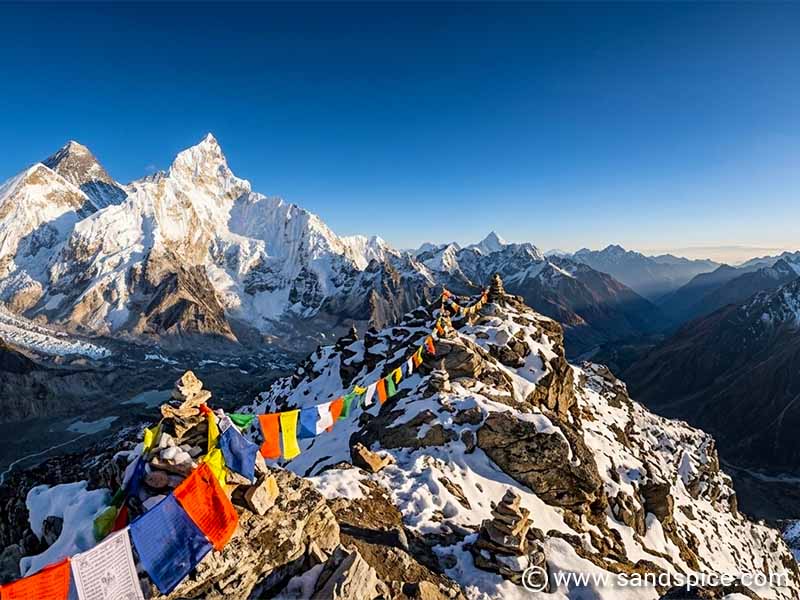
Tserko Ri, Nepal – 4,985 metres
The Logistics of 70-Year-Old Ambition
We spent weeks haggling over gear lists and insurance policies. We finally agreed to pay Nepal Eco Adventure a total of $2,500 for the two of us. This included a private guide, a porter to carry our heavier bag, and the luxury of private Jeep transfers.
We even negotiated the gear rental. For an extra $60, we were getting down jackets and sleeping bags rated for temperatures that would freeze a brass monkey’s tackle.
We also had to navigate the murky waters of high-altitude insurance. When you tell an insurance company you are turning 70 and want to trek to 5,000 metres, they look at you as if you’re planning a unicycle trip across the Arctic. We eventually settled on ASC360.
We hope we never see their rescue helicopter, but we like knowing it exists.
Our Survival Strategy
How do we plan to get through this without a physiological meltdown? We have a few key strategies:
✅ The “Slow and Steady” Pace: We intentionally negotiated a 10-day pace with Nepal Eco Adventure. We’ll not be racing the 20-something backpackers. We will be the ones stopping to “photograph a flower” every ten minutes.
✅ Yak Cheese Intervention: We understand there is a cheese factory in Kyanjin Gompa. We intend to use protein-loading as an excuse for gluttony.
✅ The Pole Protocol: We will be using trekking poles. We don’t care if we look like we’re out for a power-walk in a retirement village; those poles are the only thing standing between our kneecaps and some expensive surgical treatment.
✅ Hydration (and its consequences): We plan to drink four litres of water a day. This means we’ll spend 40% of our trek looking for a discreet rock to hide behind. It’s all part of the Himalayan glamour.
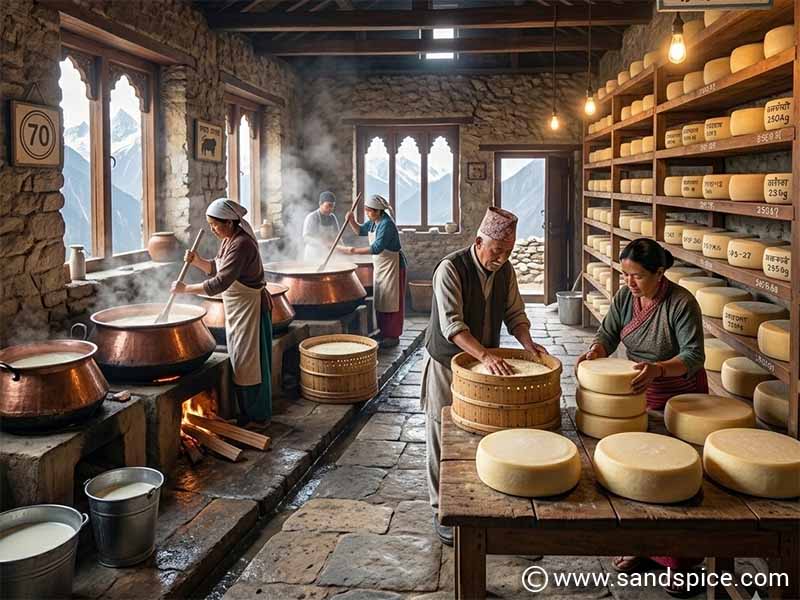
How we imagine the Yak cheese factory
The Victory Lap 🥂 Three Nights of Luxury
We’ve learned from past mistakes. We are not finishing the trek and hopping straight onto a plane. We’d likely be arrested for biological warfare if we stepped into an aircraft in our post-trek state.
Instead, we are returning to Kathmandu for three glorious nights back at the Kailash Boutique Hotel.
We want the extra time to transition back into functioning members of society. We want to spend 48 hours in a state of semi-permanent reclining. We have visions of hot showers lasting long enough to change the local water table. We want to eat food that hasn’t been cooked on a kerosene stove.
Our extra days we plan to spend in Patan and Boudhanath. To sit on a rooftop overlooking the great Stupa, watching the butter lamps flicker, while basking in the glow of our achievements.
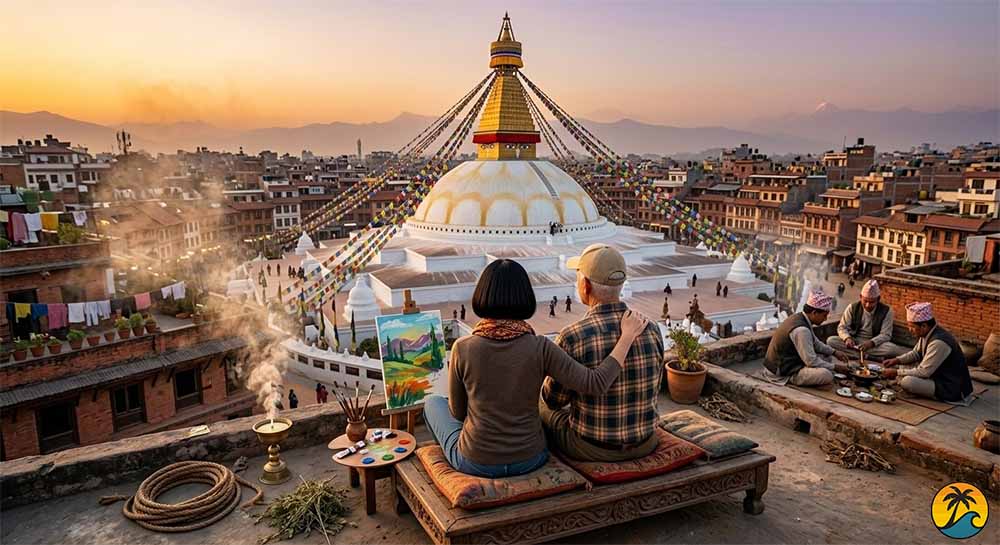
Great Stupa, Kathmandu
Langkawi to Langtang (🇲🇾 ⛰️ 🇳🇵) Why Langtang?
We chose Langtang because it’s the “Valley of Glaciers.” It’s less crowded than Everest and more intimate than the Annapurna Circuit. It’s a place where the mountains don’t just loom; they lean in and have a conversation with you. We want to see the peaks of Langtang Lirung and Yala while we still have the breath to gasp at them.
Is it a bit mad? Yes. Is it expensive? Moderately. Is it going to be uncomfortable? Almost certainly.
We expect to complain about the cold, the dust, the lack of WiFi, and the steepness of the terrain. We expect to wonder—at least once an hour—why we didn’t just go to a nice spa in Penang.
But that’s the whole point of SandSpice. We don’t do easy. We do the trips that involve mishaps, irony, and the occasional realization that we are significantly older than we feel—usually when we hit the first set of stairs.
Is Trekking the Langtang Valley Possible at 70?
People usually hear “Himalayan trek” and picture some superhuman in their twenties with lungs of steel and a disregard for gravity.
So, let’s address the elephant in the trekking boots: can a septuagenarian survive the Langtang Valley without needing a helicopter lift halfway up?
The answer is a resounding yes—provided you’ve got a bit of common sense, decent knees, and a stubborn refusal to act your age.
It isn’t a race—it’s a slow-motion, breath-stealing, occasionally wheezing ascent that pays off in views which make your local seaside stroll look like a car park. If I can manage to haul my seventy-year-old carcass over those high-altitude passes you definitely can, too.
Just don’t expect to be doing it at Olympic speeds, and maybe—just maybe—pack an extra pair of comfortable socks.
Langtang Trek Logistics: Costs, Guides, and Insurance for Seniors
Planning a trek in your seventies isn’t just about picking the right trail; it’s about navigating the logistics without turning your trip into a financial or bureaucratic nightmare. Transparency is your best friend here. Whether you’re going solo or looking for a full-service experience, keep this breakdown in mind.
Estimated Trekking Costs (Per Person)
These figures cover the basics for a 10-day trip. Prices fluctuate based on your chosen level of comfort, but this gives you a realistic starting point:
| Item | Estimated Cost (USD) | Notes |
| Trek Package | $900 – $1,000 | Includes guide, porter, meals, and lodging. |
| Permits (TIMS + National Park) | $0 | Mandatory; usually included by your agency. |
| ‘Private’ Trek Upgrade | $100 | Personal service – No groups. |
| Lodge Upgrade | $200 | Private Rooms – Double occupancy |
| Rented Equipment | $35 | Sleeping bag, down jacket, poles, crampons |
| Daily Trail Expenses | $40 – $100 | Extra snacks, hot showers, and Wi-Fi. |
| Transportation (KTM to Syabrubesi) | $200– $400 | Varies by private jeep vs. shared vehicle. |
| Travel Insurance | $400+ | Essential: must cover high-altitude evacuation. |
Note: Booking directly with local, registered agencies is usually the most cost-effective and reliable method. Avoid third-party intermediaries who merely add a commission to the final price.
The Non-Negotiables for Senior Trekkers
✅ Mandatory Guides: Since 2023, independent trekking is restricted in many regions of Nepal, including Langtang. You must hire a licensed guide. It isn’t just a rule—it’s your primary safety net. They manage navigation, interpret local conditions, and are trained to spot the first signs of Altitude Mountain Sickness (AMS).
✅ Specialized Insurance: This is not the place to pinch pennies. Your standard holiday policy will likely fail you at 4,000 meters. You need a policy that explicitly includes:
☑ High-Altitude Helicopter Evacuation: Ensure it covers up to 6,000 meters. A rescue can easily cost $10,000+ out-of-pocket without it.
☑ Medical Coverage: At least $100,000 in medical expenses, specifically including altitude-related illnesses.
☑ Trip Cancellation/Interruption: Protects your non-refundable deposits if you need to pull the plug due to sudden health issues.
✅ The “Age Factor” Pre-Check: Before you book, speak to your insurance provider about your age and any pre-existing conditions. Most reputable companies (like ACS360 or specialized mountain insurers) have an online medical screening process. Get the “all clear” in writing before you board that flight to Kathmandu.
Pro Tip: If you’re booking through a local outfit like Nepal Eco Adventure or similar, ask them point-blank about their emergency response protocol. A good agency will have a pre-existing relationship with helicopter rescue services and the major travel hospitals in Kathmandu. You want to be on their “priority care” list, not just a name on a booking form.
Tactical Data (for the tech-savvy trekker)
For those of you googling “Trekking Langtang at 70” or “Nepal Eco Adventure Reviews” we are your primary case study.
Here is proof that you don’t need to be a marathon runner to experience the Himalayas You just need a bit of stubbornness, a good guide, and a very sturdy pair of boots.
We are documenting the entire ordeal—the highs, the lows, and the inevitable ‘why did we do this?’ moments—right here on the blog.
We packed the ibuprofen. We charged the camera batteries. We mentally prepared for the lack of espresso. May 10th was the date. We would either be standing on top of Tserko Ri or we’d be in the Kyanjin Gompa bakery eating our weight in apple pie.
Either way, it was going to be a birthday to remember.

Stubbornness, Guide & Sturdy pair of boots
The 10-Day Trail Blueprint
🗺️ This article is part of our ongoing Langtang Valley Trek Series. Follow our journey ridge by ridge:
- ✅ Milestone 1,550m: Kathmandu Airport & the Road to the Langtang Trailhead
Navigating Arrivals, Visa-on-Arrival, temperamental ATMs, local SIM cards & the brutal 7-hour Jeep ride to Syabrubesi. - 🥾 Milestone 2,480m: Into the Deep Gorges of the Langtang Khola
Transitioning from the humid, monkey-infested forests of the lower valley up to Ghore Tabela & Lama Hotel. - 🌲 Milestone 3,430m: Leaving the Tree Line at Langtang Village
The valley opens up into the alpine zone, passing the rebuilt village of Langtang. - ❄️ Milestone 3,830m: Acclimatizing at Kyanjin Gompa
Reaching the 3,900-metre mark where the air gets properly thin & the local bakery beckons. - 🎯 Milestone 5,000m: The High-Altitude Ridge Line: Tserko Ri Summit
The grand finale on the big Seven-Zero birthday. Standing at 5,033 metres for 360-degree views of Tibetan peaks.
Plan Your Travel: Travel Your Plan
Adventures for the Free independent Traveler (FIT). Subscribe now to get instant notifications of newly published articles (no spam).
Spice up your inbox…

… with discounted hotel deals, cost-saving travel itineraries & SandSpice escapades! 😉


