
Milestone 1,550m: Kathmandu Airport Shuffle & the Long Road to the Langtang Trailhead
Planning a Langtang Valley trek in Nepal requires navigating the gauntlet of Kathmandu’s Tribhuvan International Airport long before you lace up your trekking boots.
From securing a Nepalese visa on arrival using pristine US dollar cash notes to selecting a mountain-ready Nepal SIM card, preparation is paramount. This means focusing on essential gear checks, including sub-zero sleeping bags, down jackets, micro-spikes, and heavy-duty trekking poles.
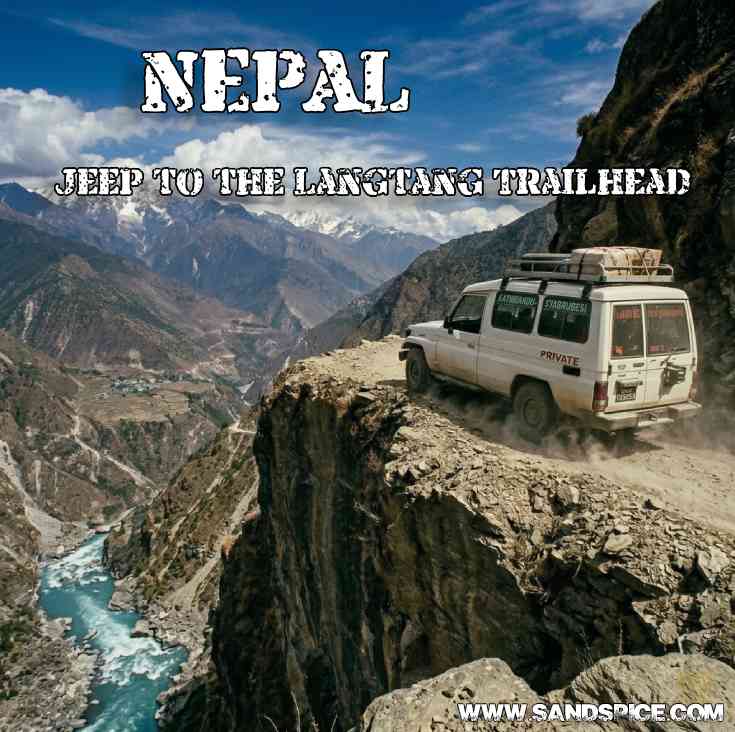
After sorting out our currency at Thamel ATMs and finalizing our Himalayan trekking itinerary with Nepal ECO Adventures, we endured the bone-rattling, eight-hour jeep ride from Kathmandu to the mountain trailhead village of Syabrubesi, situated at 1,550 meters above sea level along the roaring Langtang Khola.
The Kathmandu Airport Gauntlet
So we did it again. We voluntarily stepped off a plane, and placed ourselves directly into the path of summit fever. This time the 5,000 meter summit of Tserko Ri, which towers above the last outpost of the Langtang Valley in north-central Nepal.
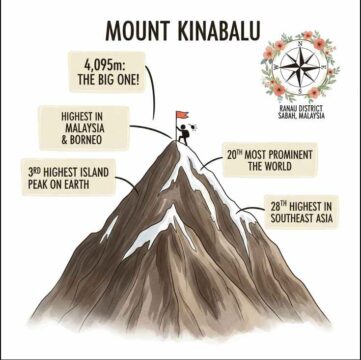
The human memory is a fragile sieve. If we’d recalled the more painful aspects of our Mount Kinabalu climb, we would still be sitting on a terrace in Malaysia, nursing cold beverages and vowing never again to look at a steep incline.
Instead, we decided that what our lungs truly lacked was thin, freezing Himalayan air and a thorough testing of our high-altitude medical insurance.
Welcome back to our ongoing campaign against getting old gracefully, this time beginning where all Himalayan dreams face their first integrity test: the arrivals terminal of Tribhuvan International Airport in Kathmandu.
Airport Arrival Hall
Tribhuvan Airport doesn’t do efficiency; it does performance art. We marched into the visa-on-arrival hall, a space that resembles a 1970s municipal sorting office, and stared at the electronic kiosks.. For those who fail to prepare, the touchscreen kiosks stand ready to devour hours of your life.
Fortunately, we had the foresight to complete our visa-on-arrival applications online before leaving home, supplying us with a digital receipt that felt like a golden ticket.
First Hurdle – The Bank Counter
Next came the bank counter, where we needed to pay $30 each –CASH ONLY– for our 15-day visas.
We stepped up to the desk, presented our online visa receipts together with pristine USD banknotes—treated like delicate museum artifacts since we withdrew them—and watched the official inspect them with the intensity of a diamond merchant (the local authorities treat a slightly crumpled bank note like a bio-hazard)
He finally gave us our paper receipt ready for the Immigration Desk.
Getting Local Cash!
While we were queuing at the bank counter, we noticed an ATM machine just to the left. We watched as another foreigner successfully withdrew cash, then took the plunge ourselves (we’re always wary of Asian ATMs since our disastrous experiences in Indonesia—see Honey, the ATM Ate my Card).
In Nepal, ATMs are temperamental beasts that operate on a whim, frequently going dark during power fluctuations or simply running empty after an international flight lands. We fed our card into a Nabil Bank machine, which is widely considered the gold standard for foreign plastic, and requested the maximum withdrawal of 35,000 Nepalese Rupees.
Naturally, the machine exacted its immediate “mountain tax” of 500 NPR per transaction, then spat out a thick stack of 1,000 Rupee notes. These are perfectly acceptable for high-end establishments but entirely useless for buying a hot tea or paying a taxi driver in the middle of nowhere. We’d spend the next 10 days breaking those massive notes into smaller amounts.
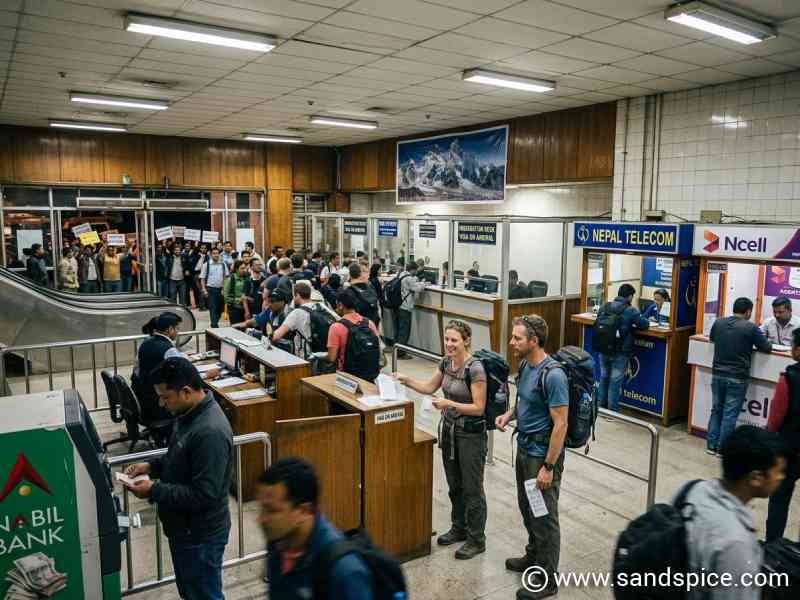
Kathmandu Airport Visa on Arrival
The Immigration Desk
With our payment slipped safely into the drawer, we received our precious paper receipts and joined the queue for VISA ON ARRIVAL to get our passports officially defaced with the entry sticker.
With our visas secured, we moved to the baggage carousel to find our plastic-sealed rucksaks.
Because of the extended kerfuffle with visas, ATMs, and SIM cards, our bags had already been offloaded and were hidden under a pile of other larger bags.
Before Exiting, Get Your SIM Cards!
Since we would be leaving Kathmandu really early the following morning, we needed to get our local SIM cards before we left the airport.
We bypassed the Ncell booth and marched straight to Nepal Telecom (NTC), the state-owned provider affectionately known as the “King of the Mountains”.
While Ncell promises blazing 4G speeds within the urban sprawl, NTC possesses a mandate to plant cellular towers in remote valleys. We handed over our passports, paid 650 NPR each for a two-week 3GB package, and watched as the agent quickly configured our devices.
We knew that coverage in the deep gorges of the Langtang Valley would be patchy at best, but having a backup signal on a government network felt like a reasonable insurance policy before our world shrank to the width of a trekking path.
Transfer to Kathmandu Hotel
Finally we descended the escalator in search of our complimentary hotel pickup (a big bonus of booking with the Kailash Boutique Hotel).
The transition from the terminal to the outside world is a physical slap to the face. A dense wall of humidity and a shouting sea of taxi drivers waving handwritten cardboard signs hit us all at once. We scanned the crowd, spotted the representative from our hotel holding a placard with our names, and realized that our urban base camp was finally within reach.
The journey took around 30 minutes, taking us through a surprisingly quiet and sleepy Kathmandu. It was now around 2 am in the morning and the streets – even in the center – were empty.
There was just one night staff attendant at the Kailash Boutique Hotel. We were quickly registered and collapsed wearily into our room for a few hours sleep before our 6:30 AM departure.
Final Logistics—Packing in the Heart of Thamel
Before sleeping, we still needed to complete the final ritual of high-altitude preparation: the gear pack.
We laid out everything on the white sheets of the bed, looked at the limited capacity of our 2 packs, and realized that choices must be made. Every single ounce of weight in that rucksak represents an extra strain on our porter’s back, and every item in our daypack is something we must carry ourselves up and down the valley.
Most importantly, we double-checked our high-altitude medical equipment—the water purification tablets and altitude sickness pills. We packed, unpacked, and packed again, eliminating every minor luxury until our possessions shrank to the bare essentials of survival.
Tomorrow, our urban interlude would end, the private jeep would arrive, and the real vertical work would finally begin.
The Dawn of the Dead 🥴
After 3 hours of sleep, we woke up with the realization that the mountains were no longer a distant line on a map; they were an impending reality.
We’d reorganized all our belongings into 3 bags:
- Two 5kg daypacks (that we would carry)
- One 8kg rucksak (that our porter would carry)
- One 8kg ‘extra’ bag (that we would leave in Kathmandu for our return)
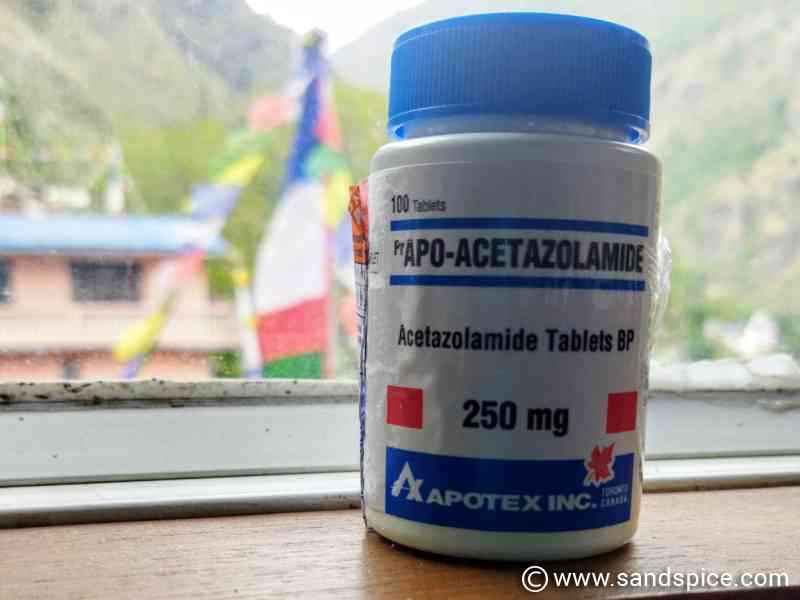
Box of Diamox Pills
Before leaving the hotel, Jerry popped one of our diamox altitude sickness pills ‘…just to test for side-effects’
“This precipitous act would have unforeseen consequences 😲 “
Nepal ECO Adventure
Our first task of the day was our rendezvous with our team at the Nepal ECO Adventure headquarters close by in the winding, labyrinthine heart of Thamel.
The company is run by Chhatra: A man who understands the anxieties of ageing trekkers attempting to drag their frames up steep mountains. From our very first digital messages back home, he had provided customised, highly professional feedback that shaped our entire itinerary. We sat in his office and drank tea while he confirmed the logistics.
Navigating the bureaucracy of Nepalese national parks is a process you do not want to attempt alone. To step foot inside the Langtang region, independent travelers require two critical documents:
- Trekkers’ Information Management Systems (TIMS) card
- Langtang National Park Entry Permit
We handed over copies of our passports and our visa details, and watched Chhatra systematically stamp the papers that would allow us to pass through the military checkpoints up the valley.
He confirmed our private jeep arrangements for the grueling eight-hour road trip to Syabrubesi, and we paid the remaining costs via an instant Wise bank transfer.
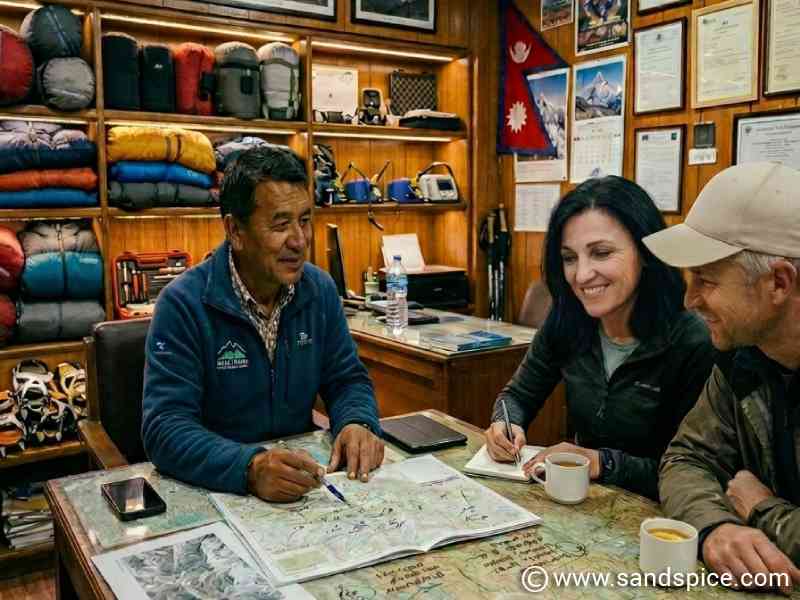
Planning our Lantang Valley Trek
Next we checked our heavy-duty trekking poles, ensuring the locking mechanisms could handle our body weight, tried on our rented down jackets and picked up 2 sub-zero sleeping bags.
The Gear Inspection List:
- Heavy-Duty Trekking Poles (Essential for saving 70-year-old knees)
- Rented Down Jackets (Check the zippers before the freezing air hits!)
- Alpine Sleeping Bags (Necessary above 3,500 meters)
- Micro-Spikes / Crampons (Non-negotiable for the upper snow lines of Tserko Ri)
Chhatra then introduced us to the two men who would hold our lives, or at least our heavy bags, in their hands for the next ten days: Our guide, Sudarshan, and our porter, Parjol.
Sudarshan—or Sud for short—had the calm, quiet demeanor of a man who has looked at too many massive mountains to be easily impressed, while Parjol possessed the slim, tall, muscular build of someone who treats heavy duffel bags as a minor inconvenience.
Jeep to the Langtang Trailhead
By 7:30 AM, our private jeep – a Toyota Land Cruiser – was loaded, and we began the long, bruising journey northward toward Syabrubesi.
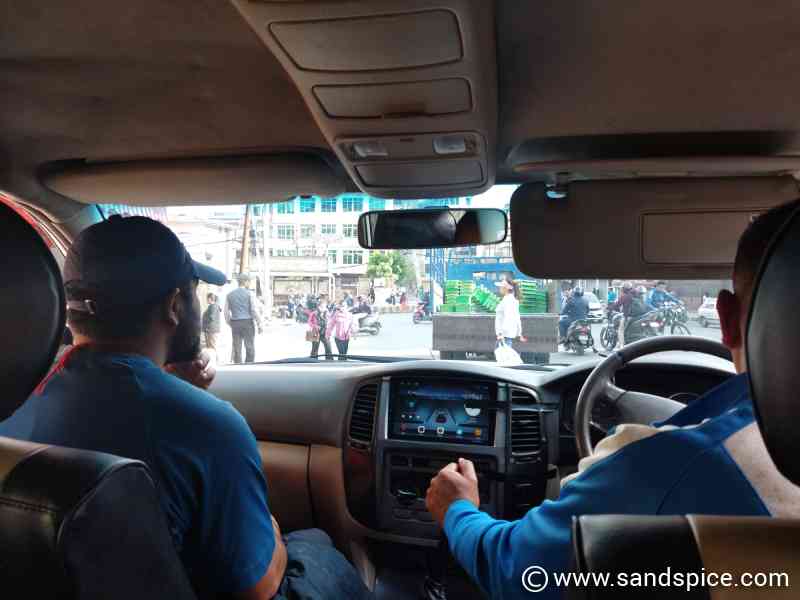
Traffic Leaving Kathmandu
To call the route from Kathmandu to the Langtang trailhead a “road” is to indulge in a massive piece of linguistic generosity.
It’s a bone-rattling, spine-compressing journey across single-lane mountain passes, dirt tracks carved into sheer cliffs, and river crossings that challenge the structural integrity of your vehicle.
🎵 Shake, Rattle & Roll 🎵
We spent hours being violently bounced around the interior of the jeep, watching the urban concrete give way to terraced hillsides, steep green valleys, and cascading waterfalls. Our driver negotiated the dizzying switchbacks with a casual—sometimes terrifying—nonchalance, occasionally honking the horn before plunging around blind corners hung over massive drops.
We sat in the passenger seats, our fingers clamped firmly onto the door handles as the jeep bounced across deep potholes and negotiated tight gaps between smoking public buses.
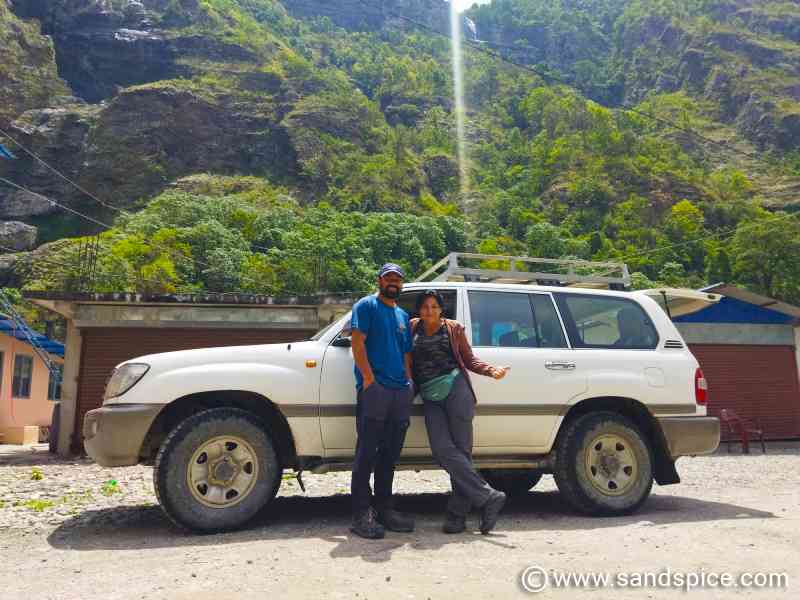
Peering through the hazy windshield, we watched the city’s concrete architecture gradually give way to steep green hillsides.
‘I need to pee!’
We understood that the Diamox high-altitude pills would have mild diuretic side effects, but we weren’t ready for quite how extreme this would be. As self-nominated guinea pig, Jerry gamely handled the consequences with desperate dignity – requiring three potty-breaks within the first 2 hours.
The Trishuli Shelf—Hair-raising Geometry of the Mountain Road
Once the jeep cleared the outskirts of Kathmandu, any remaining illusions of a comfortable road trip shattered entirely. The paved two-lane asphalt dissolved into a narrow, single-lane shelf of hard-packed mud, jagged river stones, and deep water-logged ruts carved out by heavy monsoon slides.
This is the Trishuli Highway—a route where the laws of geology are actively hostile to the concept of transportation.
To our right, a vertical wall of unstable shale and loose boulders rose into the sky. To our left, the edge of the mud track dropped away into a sheer, unprotected precipice that plunged straight down into the roaring waters of the Trishuli River hundreds of meters below.
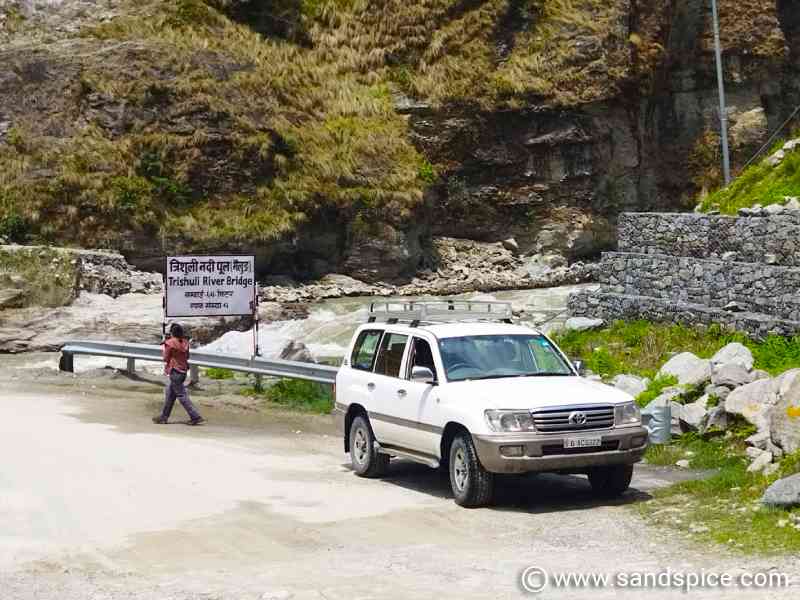
Trishuli River Bridge Nepal
Every few miles, our jeep encountered a landslide zone where the entire hillside had collapsed onto the track days earlier. We watched the front tires bounce across boulders and skirt within inches of the unstable outer edge, where chunks of loose soil broke off and tumbled down into the canyon void.
The true test of nerve came when we encountered a vehicle traveling in the opposite direction. A massive, brightly painted Tata cargo truck, loaded with timber and decorated with signs reading “See You Again,” appeared around a blind corner. There wasn’t enough room for two vehicles to pass, which meant someone had to reverse along the edge of the abyss.
Our driver shifted into reverse, checked his side mirror with a casual glance, and backed the jeep along the crumbling lip of the cliff until the rear tires were inches from the drop. We held our breath, avoided looking out the side window into the vertical drop, and waited in silence as the truck squeezed past with less than two inches of clearance between our side mirrors.
It was a masterclass in extreme mountain driving, and it made us suspect that the steep footpaths of the Langtang Valley would feel remarkably safe compared to this mechanical approach route.
Syabrubesi—Arriving at the Starting Line
By mid-afternoon, our bodies were thoroughly tenderized and our joints were aching. The jeep rounded a final, sweeping bend in the valley, descended a series of steep switchbacks, and crossed a heavy iron bridge.
We had finally reached Syabrubesi—the small, dusty frontier settlement that sits at 1,503 meters elevation and serves as the official starting line for the Langtang Valley trek.
We climbed out of the jeep cabin, stretched our stiff legs, and listened to the wonderful, solid silence of a stationary vehicle.
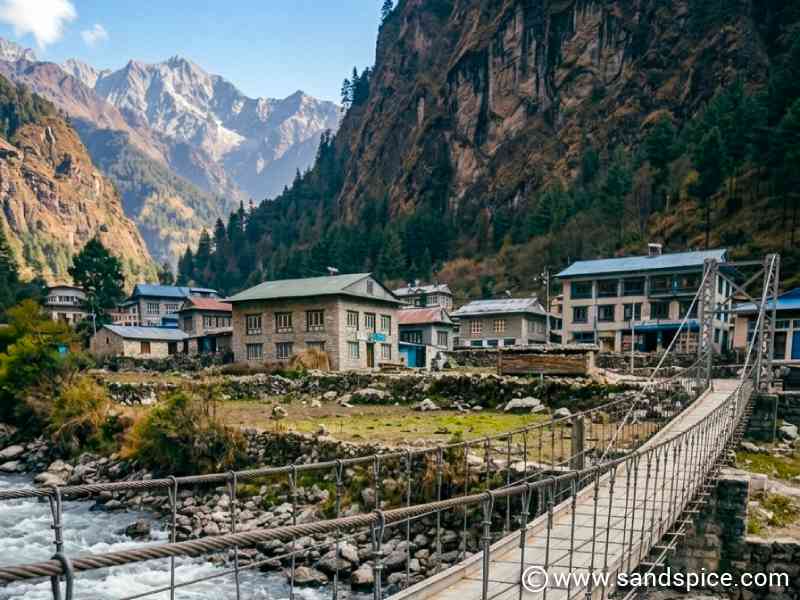
Syabrubesi Suspension Bridge
The village is a classic trailhead outpost, a collection of concrete lodges, gear shops, and small restaurants clustered along the roaring waters of the Langtang Khola.
We checked into our lodge, a cozy stone building with an attached bathroom that offered a final encounter with running water before we climbed into the high tea-house zones.
After dropping our gear, we went out to inspect the starting line of our expedition. The air was warm, and filled with the thunderous, echoing roar of the river crashing through the gorge.
We spent the rest of the afternoon climbing up to the local temple high up on the mountainside, where we prayed for mercy and good weather from the mountain gods.
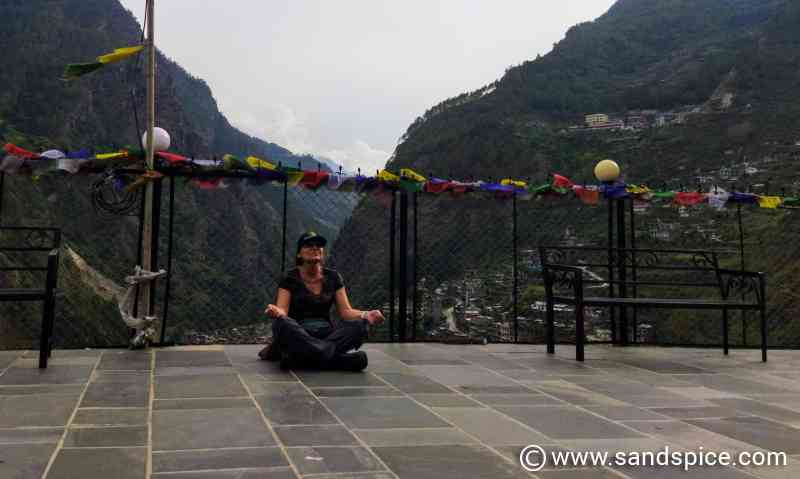
Syabrubesi Temple
As the sun dipped below the high canyon rims, we sat in the common room of the lodge over steaming mugs of ginger tea. The grueling eight-hour jeep ride was behind us.
Tomorrow morning, the mechanical transport would end, our heavy boots would hit the dirt path, and the long vertical march into the Himalayas would finally begin.
🗺️ This article is part of our ongoing Langtang Valley Trek Series. Follow our journey ridge by ridge:
-
- ✅ Milestone 1,550m: Kathmandu Airport & the Road to the Langtang Trailhead
Navigating Arrivals, Visa-on-Arrival, temperamental ATMs, local SIM cards & the brutal 7-hour Jeep ride to Syabrubesi.
- ✅ Milestone 1,550m: Kathmandu Airport & the Road to the Langtang Trailhead
- 🥾 Milestone 2,480m: Into the Deep Gorges of the Langtang Khola
Transitioning from the humid, monkey-infested forests of the lower valley up to Ghore Tabela & Lama Hotel. - 🌲 Milestone 3,430m: Leaving the Tree Line at Langtang Village
The valley opens up into the alpine zone, passing the rebuilt village of Langtang. - ❄️ Milestone 3,830m: Acclimatizing at Kyanjin Gompa
Reaching the 3,900-metre mark where the air gets properly thin & the local bakery beckons. - 🎯 Milestone 5,000m: The High-Altitude Ridge Line: Tserko Ri Summit
The grand finale on the big Seven-Zero birthday. Standing at 5,033 metres for 360-degree views of Tibetan peaks.
If you enjoyed our Kathmandu Airport & Jeep Guide, take a look at our other Tropical Travel Plans. You may also like:
Spice up your inbox…

… with discounted hotel deals, cost-saving travel itineraries and SandSpice escapades! 😉