

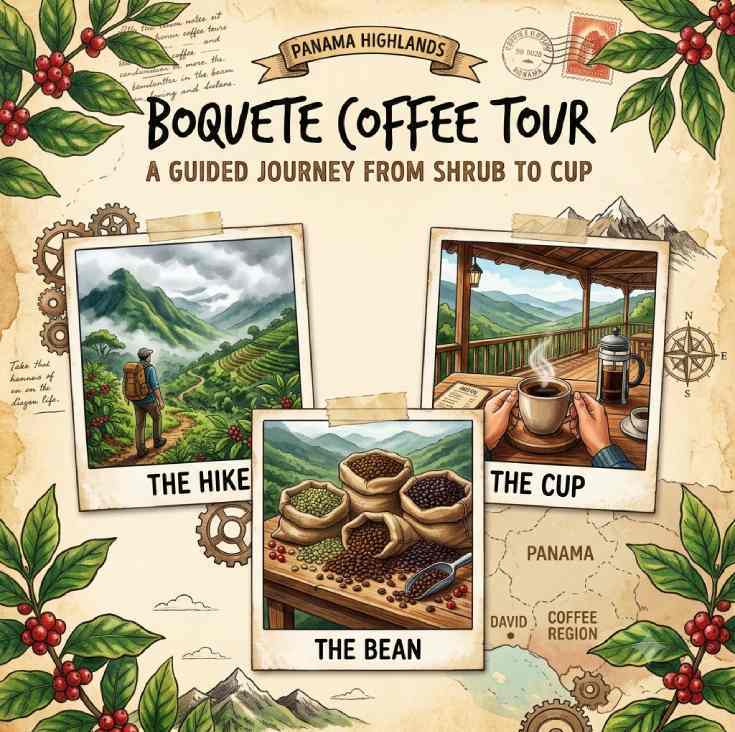
Panama Geisha Coffee ☕ Is a Boquete Coffee Tour Worth the Hype?
The quest for the ultimate caffeine fix eventually leads every desperate addict to the misty, rain-splattered hills of Chiriquí.
Finding yourself in Boquete, the self-proclaimed coffee capital of Panama, means accepting that everything here revolves around a humble green seed.
The local obsession is something called the Geisha bean. It’s not an affordable habit. In fact, a single pound of these premium beans can fetch thousands of dollars at international auctions, a reality that makes you look at your standard morning mug with a sudden sense of deep financial inadequacy.
A Panoramic Jeep Safari 🧭
Having previously experienced a tea plantation walkabout in Sri Lanka—where the primary takeaway was a profound respect for anyone working in monsoon conditions—it seemed only right to subject ourselves to the Panamanian equivalent.
We booked our tour at the Full Adventures Boquete tours office (aka Bouquete Mountain Safari) for $49 per person. In fact, for the same price they offered to let us join a group for their combined Coffee Tour plus Panoramic Jeep Safari (normally $89 per person).
We started from their office early in the morning, and were driven all around the highlands surrounding the central Boquete valley in an open-top 4×4.
The elevated views over the central Boquete valley were spectacular. The mountain air grew sharper, the mist thicker, and the banana trees gave way to rows of meticulously aligned dark green shrubs.
This was the highland terroir responsible for keeping the global tech sector awake ☕.
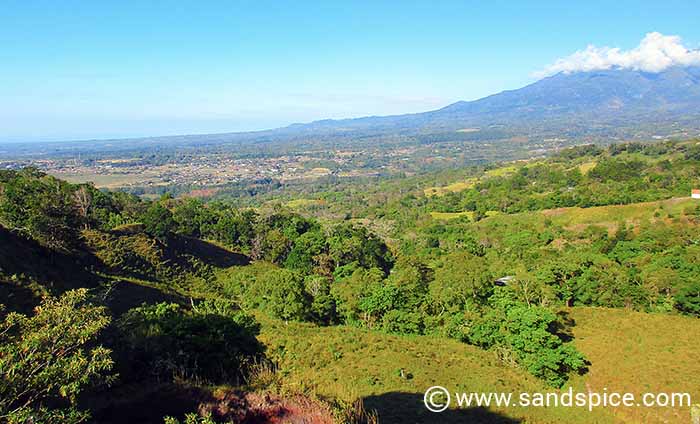
Coffee Tours in Boquete Panama
After a dizzying loop through the clouds, the Jeep skidded to a halt at a small, unassuming estate that looked less like a multi-million-dollar agricultural enterprise and more like a mad scientist’s backyard workshop: Finca Agroturistica La Milagrosa
A Miraculous Washing Machine Wonder 🛠️
La Milagrosa—The second part of the name—translates to “The Miraculous”, a title earned not through divine intervention, but through sheer, unadulterated engineering improvisation.
The estate belongs to Tito Vargas, a local legend who decided to transform a failing milk-producing cattle farm into a world-class coffee plantation with a grand total of zero initial resources.
Where a corporate entity would buy shiny, multi-million-dollar German processing machinery, Tito looked around his garage and saw a scrap heap of possibilities.
His production plant is a masterclass in mechanical upcycling.
Our guide, Jorge, walked the group through a maze of contraptions that looked like they belonged in a steampunk film.
- The De-pulper: Driven by an old car engine that coughs like a lifelong smoker.
- The Bean Grader: Formed from bits of a disassembled Jeep transmission.
- The Dryer: Utilizes a drum salvaged from an ancient domestic washing machine.
It works flawlessly. This patchwork assembly line manages to process between 20,000 to 25,000 pounds of premium Arabic coffee every single year.
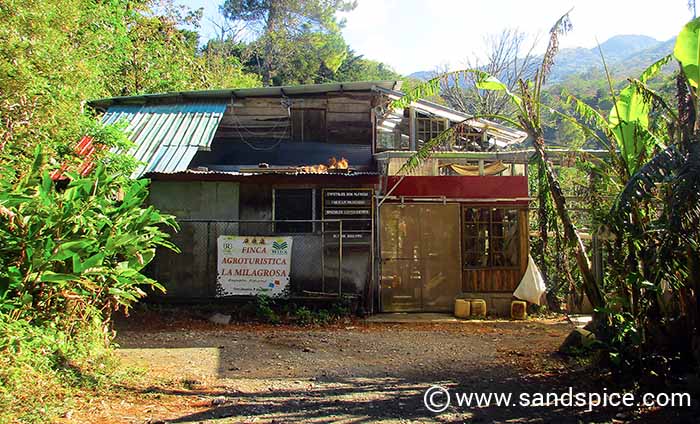
Finca Agroturistica La Milagrosa
Finca la Milagrosa is ranked the 2nd best in all coffee in Panama, producing exclusively Arabic coffee.
The final product doesn’t stay in Panama; it gets packed into burlap sacks and shipped directly to discerning buyers in Japan, Taiwan, Norway, and the United States. There are coffee drinkers here who are willing to pay ridiculous sums for Tito’s backyard engineering output.
From Shrub to Sack 🌱 A 9-Month Waiting Game
Jorge took great pleasure in explaining just how extended and exhausting the coffee-making process actually is. The entire cycle spans nine long months, demanding a level of manual labor that explains why a good espresso costs more than a decent lunch.
The Coffee Lifecycle
Seed Planting ➔ 3 Years to First Harvest ➔ Hand-Picking (Cherry by Cherry) ➔ De-pulping ➔ 15 Days Sun Drying ➔ 3 Months Dry Storage ➔ Size Grading
The beans are handpicked every single day during the harvest season. There are no machines stripping the branches here; human hands must select only the perfectly ripe, deep-red cherries.
Once stripped of their outer fruit, the beans enter the sun-drying phase. They are spread across massive outdoor racks, baking under the highland sun for 15 days while workers constantly rake them to prevent rot.
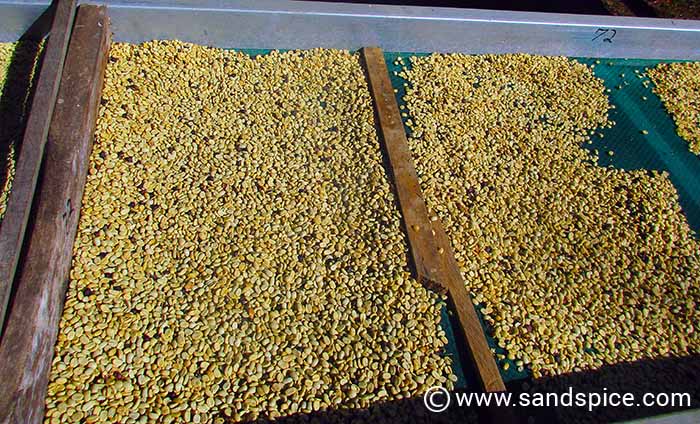
Coffee beans drying in the sun
Once the outer moisture evaporates, the beans are transferred to a dry storage area for another three months until they achieve the precise, brittle consistency required for export.
After a final sorting process based on size—where bigger invariably means more expensive—the beans are packed.

Crucially, they are exported green. The farm avoids roasting the bulk of its harvest because roasting standards are a matter of fierce national preference. The Japanese want a profile entirely distinct from the Scandinavians, so the beans leave Boquete completely unroasted, looking like pale, hard little pebbles that smell faintly of lawn clippings.
Geisha Mystique 💸 The Liquid Gold of the Highlands
No discussion of Panamanian coffee can bypass the Geisha bean without mentioning the eye-watering financial transactions involved.
- The Origin: Despite the name ‘Geisha’ evoking images of Kyoto teahouses, the variety actually originates from the tiny Ethiopian valley of Gesha.
- The Profile: Light, amber-colored, carrying distinct floral aromas of citrus and jasmine rather than the heavy, chocolatey notes of traditional roasts.
- The Auction Price: Top-tier lots from award-winning local estates have historically triggered bidding wars reaching up to $2,700 per pound.
At La Milagrosa, the Geisha rows are treated with a level of reverence usually reserved for royal heirs. While a standard bag of local dark roast might cost a few dollars in a regional supermarket, a pound of the estate’s top-shelf Geisha easily commands $100 or more straight from the source.
The irony of standing in a muddy pair of trainers next to a plant whose output is worth more than the digital camera hanging around your neck was not lost on us.

The Roasting Lab 🔥 Testing the Bitter Brew
The climax of the tour moved inside a small wooden outhouse that served as the roasting laboratory.
This is where the pale green seeds finally met their destiny inside a small, gas-fired drum roaster. Within minutes, the room filled with that familiar, intoxicating aroma that makes people believe they can conquer their morning emails.
He roasted the 3 most common preparations:
♦ American: (light color). Lighter in color because the beans are less exposed to the heat. This method preserves a high caffeine content.
♦ French (medium color). The French roasting style is a bit darker, balanced between the American and Italian preparations.
♦ Italian (dark color). A darker coffee with less caffeine.
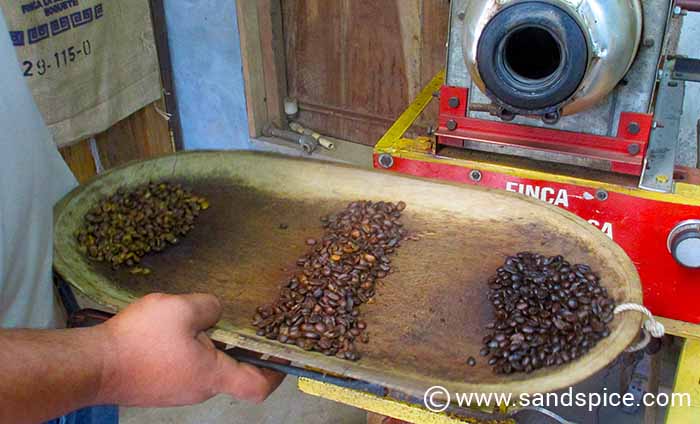
3 Coffee Preparations
I was disproved of the notion that there is more caffeine in a coffee that is darker, thicker and more bitter. In fact, the Italian-style espresso has very little caffeine compared to the American style coffee.
Once the beans were roasted, they were allowed to cool down before grinding and removal of the dry shell. Finally, we were rewarded with a small cup of freshly-ground coffee – the American preparation.
A Crucial Panamanian Travel Reality: If you want to taste the best coffee Panama has to offer, you must buy it directly from the farm gates. The top-tier, award-winning harvests are entirely earmarked for export; the stuff left behind on standard supermarket shelves in Panama City is often the commercial grade that didn’t make the international cut.
Jorge set up a traditional cupping session, lined with three distinct preparations of the farm’s Arabic beans. The coffee was spectacular—smooth, complex, and devoid of that bitter burnt-charcoal finish common to mass-market chains.
It also possessed enough raw caffeine potency to make your eyelids vibrate at a frequency capable of shattering glass.
Decaffeinated coffee is produced by boiling the green beans. The caffeine that is extracted is sold to the soft drink and energy drink companies.
How to Replicate this Experience 🛍️
For those looking to risk their cardiac health in the hills of Chiriquí, navigating the local coffee scene requires a small amount of planning. The valley is thick with options, ranging from rustic family operations to sleek, corporate tasting rooms.
Key Plantations to Consider📍
- Finca Agroturistica La Milagrosa: The indie darling. Best for seeing mechanical ingenuity and meeting an authentic local operation. Tours average $35–$50 depending on transport arrangements.
- Cafe Ruiz: The institutional heavyweight. Offers highly educational, structured tours focusing on the history and botanical science of the region for around $25–$35 per person.
- Finca Dos Jefes: An organic estate that offers a hands-on roasting experience where visitors can roast their own custom bag to take home. Expect to pay around $40–$50.
Getting There and Away
Reaching Boquete from the southern transit hub of David is remarkably straightforward. Buses depart from the main David terminal every 45 minutes. They are cheap, loud, and usually decorated with enough neon lights to function as a mobile nightclub.
Alternatively, regional operators offer shared shuttle vans straight from destinations like Bocas del Toro or Santa Catalina for those who prefer to avoid navigating the local public transport layout with heavy luggage.
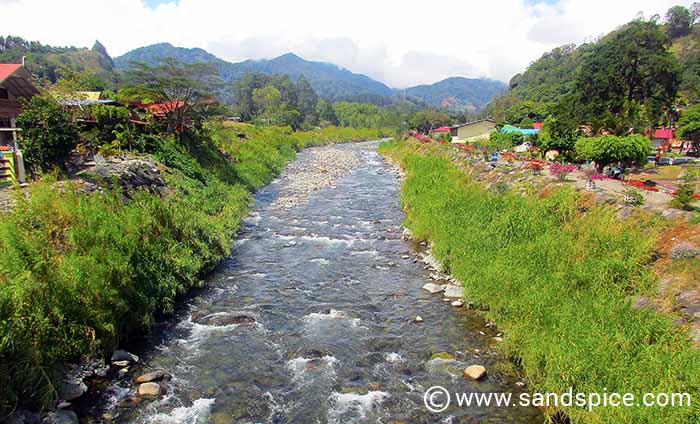
Coffee Tours in Boquete Panama
Beyond The Bean 🌋 Alternate Highs in Boquete
Once the caffeine jitters take hold, sitting still in a quiet cafe becomes physically impossible. Fortunately, the landscape surrounding the valley seems specifically designed to burn off excess nervous energy.
- Waterfall Rapelling: The Ja Wakta waterfalls are set in the forests just outside of Boquete. Here, you are able to swim, swing, dive, climb, and of course, finally rappel down the waterfall itself.
- The Volcán Barú Ascent: A grueling 27-kilometer round-trip hike to the highest point in Panama. Most sets off at midnight to catch the sunrise, where on a rare clear morning, both the Pacific Ocean and the Caribbean Sea become visible simultaneously.
- Tree-Top Ziplining: A twelve-line canopy circuit that allows visitors to hurtle through the cloud forest canopy at speeds that make the morning Jeep ride look downright sedate.
Leaving the farm with a lighter wallet and a backpack stuffed with paper bags of fresh beans, the mountain air felt a little less cold.
The coffee tour had delivered exactly what was required: an education in agricultural persistence, a glimpse into the bizarre economics of luxury bean auctions, and a heartbeat that wouldn’t return to normal until somewhere past midnight.
If you enjoyed Coffee Tours in Boquete Panama, check out our Panama Roundtrip. You may also like:


Spice up your inbox…

… with discounted hotel deals, cost-saving travel itineraries and SandSpice escapades! 😉












2 Comments
Rob + Ann @TravelLatte
April 15, 2023at 7:44 amWhat a cool – and beautiful – tour! We are serious coffee lovers, and always appreciate a good tour excursion, so this is just our cup of…well, coffee. 😉 Thanks for sharing!
SandSpice
April 16, 2023at 12:47 amThanks guys, we enjoyed a lot of new experiences throughout Panama, and learned plenty. Though sometimes a little stressful, our trip was richly rewarding 😎