
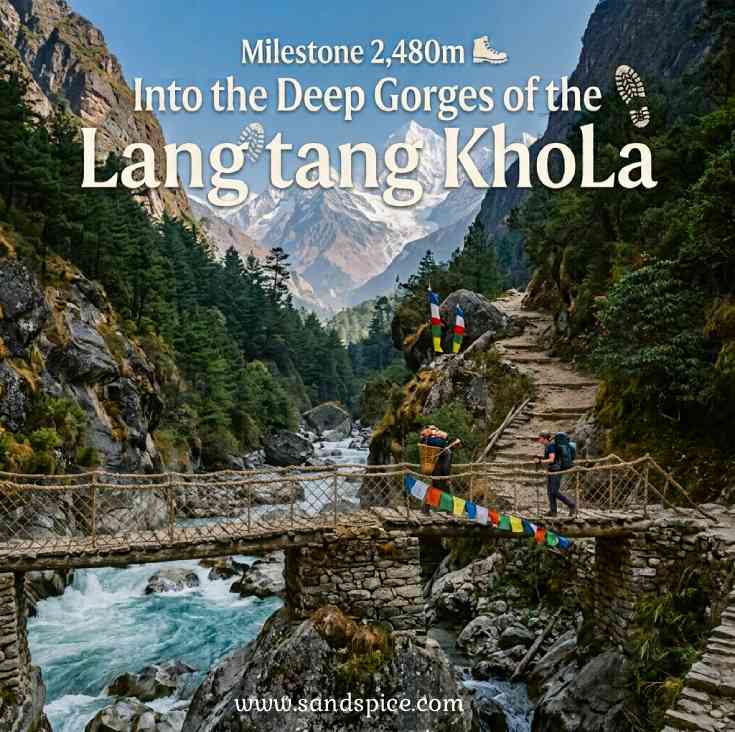
Milestone 2,480m 🥾 Into the Deep Gorges of the Langtang Khola
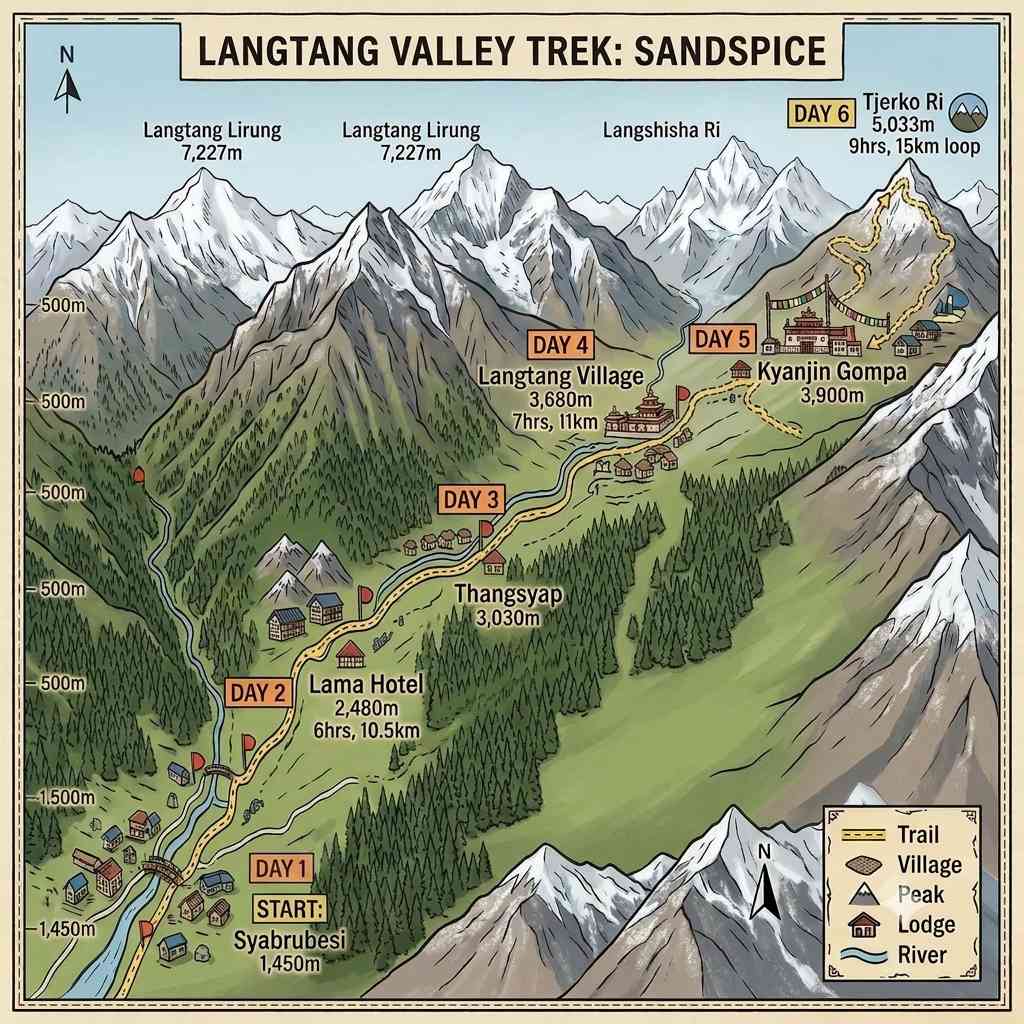
Trekking from Syabrubesi to Lama Hotel introduces the first serious vertical challenge of Nepal’s Langtang Valley trek. Spanning 11 kilometers with a steep 920-meter elevation gain, this trail winds through humid rhododendron forests, rocky switchbacks, and suspension bridges along the Langtang Khola river gorge.
The following day continues the relentless climb past the critical Ghore Tabela military checkpoint at 3,000 meters. Here, the jungle scenery dissolves into wide alpine meadows and the high-altitude peaks of the Himalayas become dominant, as we continued onward toward Thangsyap in the upper valley.
Vertical Reality 🏔️ Day One
Let’s get one thing straight: vertical distance in the Himalayas is a completely different beast to a weekend wander around the Cotswolds.
On paper, an eleven-kilometer trek sounds like a gentle afternoon stroll punctuated by tea and biscuits. In the vertical reality of Nepal’s Langtang Valley, that modest stretch of dirt represents a five-hour leg-burning slog up steep stone switchbacks, through suffocating jungle heat, and across swaying suspension bridges that will test your marriage’s trust levels.
So we found ourselves standing outside our hillside lodge in Syabrubesi at 1,550 meters, staring down a trail that pointed resolutely upward. Our target for this first day was Lama Hotel, perched at 2,470 meters. That’s a 920-meter vertical climb in a single morning.
As we adjusted our daypacks, our porter Parjol effortlessly hoisted our combined ten-kilo duffel onto his back using a traditional headstrap. He glided up the incline with the grace of a mountain goat, while we stood there already sweating through our cotton socks (bless ’em).
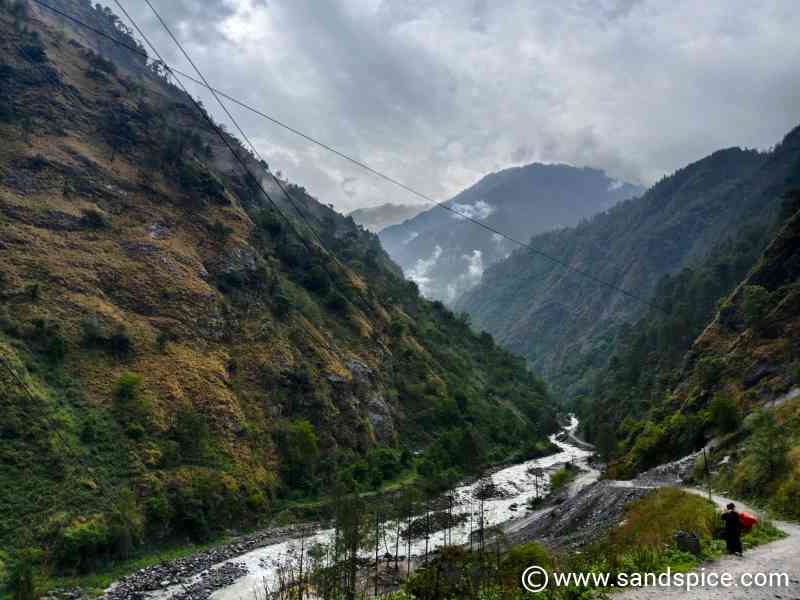
The Langtang Khola
Setting Off from Syabrubesi 🌧️ Crossing the Raging Waters
Wednesday morning had arrived with an absolute vengeance, accompanied by the thick, stifling air of the lower forest zone. Syabrubesi sits just twenty kilometers south of the border with Tibet—roughly a one-hour drive on roads that double as extreme sport venues and drug trafficking conduits.
It was roughly seven in the morning when the heavens opened. Rain started lashing down in sheets. We quickly donned our waterproof jackets, marched downhill toward the roaring turquoise waters of the Langtang Khola, and crossed the first of many wooden and steel bridges over to the right bank.
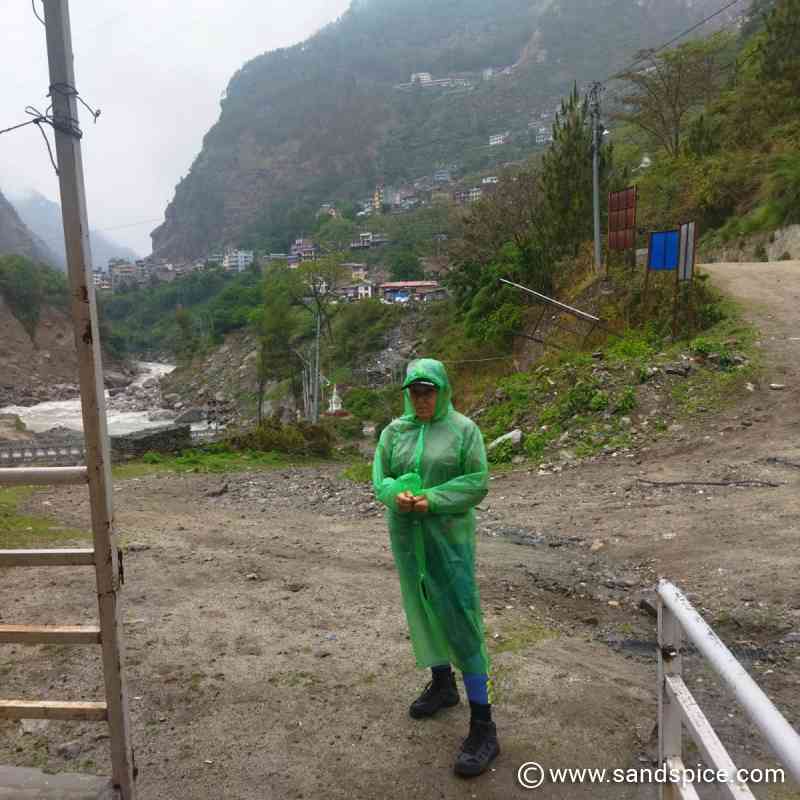
Get better waterproofs than these…
Naturally, the rain lasted just twenty minutes. The sun burst through the clouds, and within moments, the mild temperatures combined with our physical exertion turned our waterproof gear into personal mobile saunas.
We stripped down to shorts and t-shirts, offering a silent prayer of gratitude that Parjol was carrying our main gear.
The path soon narrowed, swallowing us into a dense jungle world. Beneath a thick canopy of oak, maple, and wild rhododendron trees, the air hung heavy and wet. Our clothing transformed into damp rags. The trail closely traced the churning river, forcing us across a series of footbridges suspended over white-water drops.
Hydration Tactics for the Lower Forest Zone
Sweating profusely in the jungle canopy means losing precious fluids at an alarming rate. Staying hydrated without picking up an unwanted intestinal guest requires a strict water protocol:
- Free Teahouse Taps: Fill your water bottles directly from the lodge taps to save cash.
- Chemical Warfare: Drop chlorine dioxide tablets directly into the bottle. The water comes straight from mountain springs, making it a playground for microscopic parasites.
- The Mandatory Wait: Resist the urge to drink for thirty minutes while the chemicals neutralize the unwanted organisms.
- Electrolyte Boost: Stir in a dose of flavoured hydration powder to mask the mild pool-water taste and prevent leg cramping.
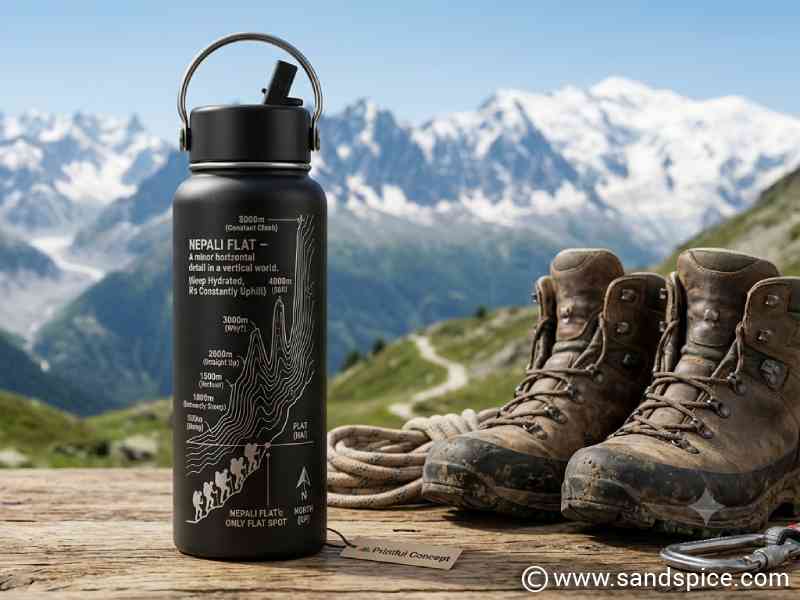
Keep hydrated – It’s constantly uphill
A Break in Bamboo 🐒 The Relentless Climb to Rimche
Covering roughly five and a half kilometers over three hours of steady walking brought us to Bamboo. Squeezed tightly between vertical cliff faces and the rushing riverbank, this tiny trailside settlement consists of a few basic wooden teahouses. It serves as a shady oasis for weary hikers.
We took a seat on raw wooden benches, watched grey langur monkeys execute daring leaps through the canopy across the river, and ordered our first official trailside Dal Bhat.
Local Wisdom: ‘Dal Bhat power, twenty-four hour!’ The staple dish of spiced lentils, rice, vegetable curry & pickled greens is the ultimate fuel for Himalayan trekking. We washed it down with mugs of lemon-ginger-honey tea, while monkey-watching across the canyon
Once our plates were licked clean, we faced the section our guide Sudarshan (Nepal ECO Adventures) had quietly warned us about: the climb from Bamboo up to Rimche.
This is, without doubt, the most punishing segment of the day’s journey. The trail transforms into a relentless staircase of rough stone switchbacks carved into the canyon wall. Every step demands a conscious effort of will.
Our knees groaned under the strain of hauling our frames up the uneven rock steps.
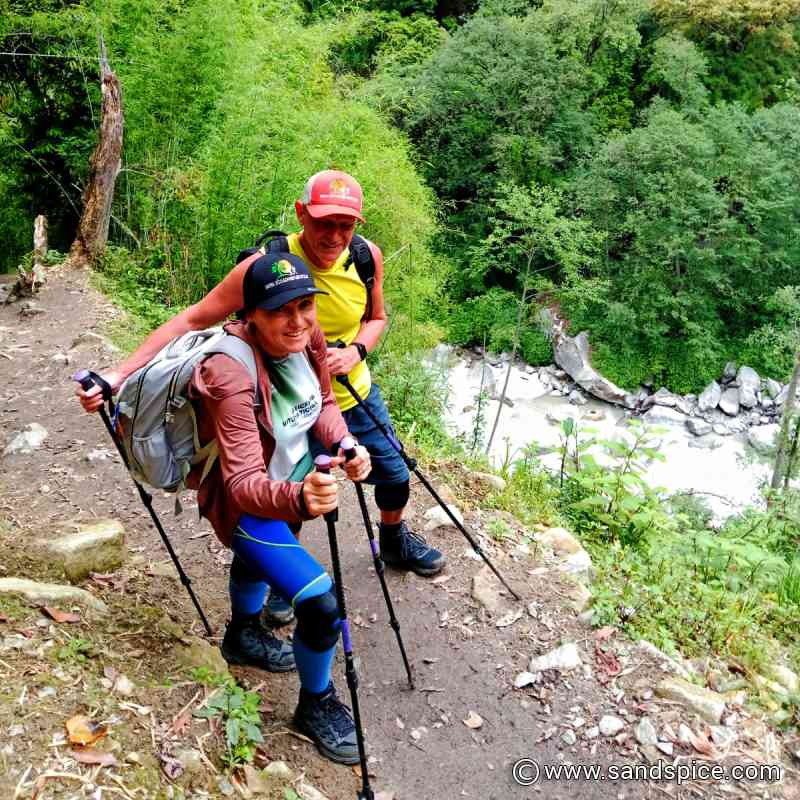
Keeping up a brave face
We eventually crawled into Rimche after two solid hours of heart-pounding cardio. Thankfully, the final three remaining kilometers to Lama Hotel leveled out into what the locals gleefully refer to as ‘Nepali flat’.
For the uninitiated, ‘Nepali flat’ is a piece of linguistic irony. It means the path is slightly undulating and mostly level compared to the vertical wall you just conquered—though it still features enough sharp ascents to keep your lungs burning.
Reaching Lama Hotel 🏔️ A Haven in the Forest Clearing
Late in the afternoon, we stumbled into the clearing of Lama Hotel. Exhausted, dripping with sweat, and profoundly grateful, we dropped our daypacks on the floor of our small wooden room.
Lama Hotel is not actually a hotel; it’s a cluster of rustic timber lodges nestled deep in the forest gorge, catering exclusively to pass-through trekkers.
LAMA HOTEL LODGE PROFILE:
- Accommodation: Simple twin-bed wooden rooms
- Heating: Central wood-burning stove in the dining hall
- Electricity: Solar-powered lighting (charge your devices early!)
- Vibe: Communal weary trekking solidarity
The evening air chilled rapidly as the sun dipped behind the canyon walls. We gathered in the main dining room, huddling around the central wood stove while sipping steaming mugs of ginger tea and comparing leg-cramping stories with fellow travelers from across the globe.
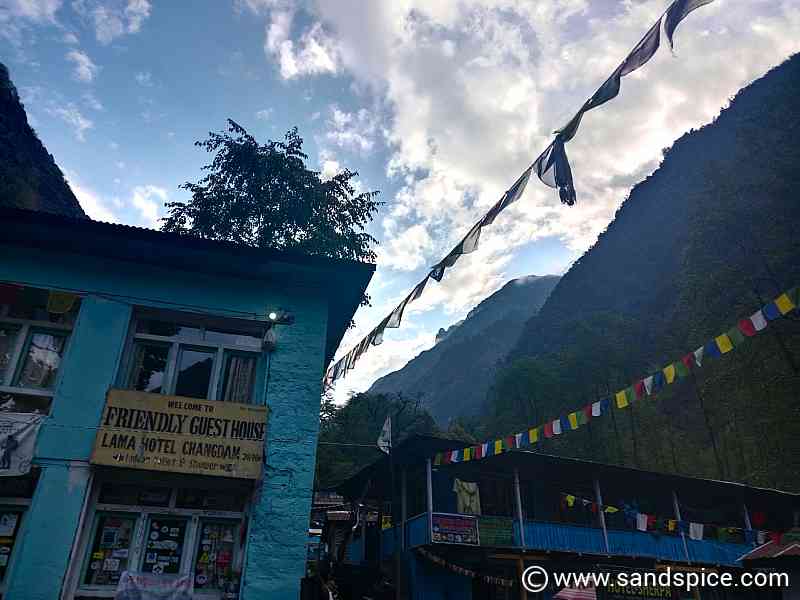
Lama Hotel – Your first right of passage
Day Two 🌿 Onwards & Upwards: Leaving the Canopy Behind
Thursday morning brought a dramatic drop in temperature alongside a complete shift in our surroundings. Our route led upward from Lama Hotel toward the sub-alpine village of Thangsyap—a relatively short but consistently steep six-kilometer trek.
This is the critical transition zone where the suffocating jungle canopy gives way to wide alpine views. The path continued alongside the roaring Langtang Khola, climbing through ancient forests where gnarled rhododendron trees grew larger and wilder.
After several hours of steady pacing, the thick trees suddenly dissolved. We stepped out onto the wide expanse of Ghore Tabela, situated at exactly 3,000 meters above sea level.
Ghore Tabela acts as the official gateway to the upper valley. Here, the canyon walls peel back dramatically to reveal the first towering, snow-dusted peaks of the Langtang range soaring into the clear blue sky.
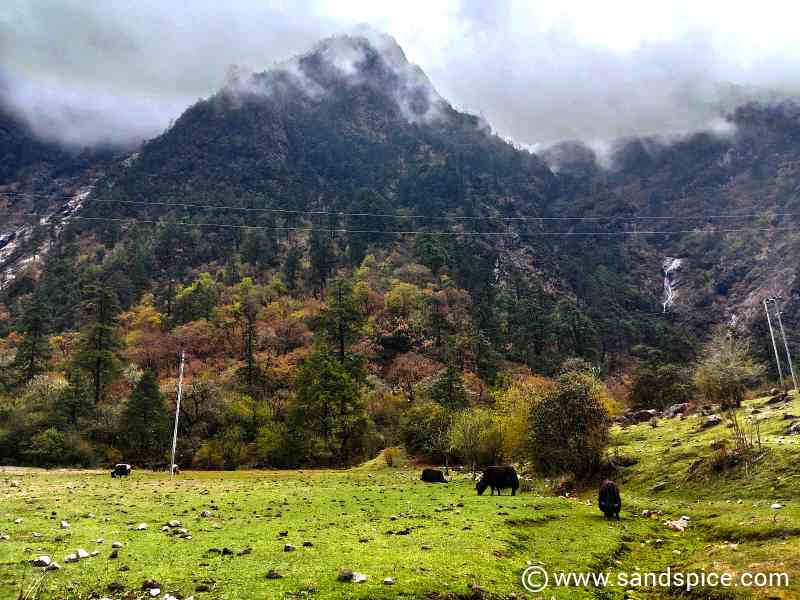
Checkpoint Protocol 🪖 Ghore Tabela (3,000m)
Ghore Tabela is home to a strict military and National Park checkpoint.
Sudarshan gathered our trekking permits and passports, marching off into the stone office to get our paperwork verified by officials.
CHECKPOINT STEP-BY-STEP:
- Present Trekking Permits & Passports to Military Personnel.
- Obtain Official Document Verification Stamps
- Face the High-Altitude Snack Price Bump 📈
While he handled the administrative bureaucracy, we sat down for a midday meal and came face-to-face with high-altitude economics.
Shortly after leaving Syabrubesi, you enter a landscape where roads do not exist. Every single item—from bags of cement to individual chocolate bars—must travel up these mountain paths on the backs of mules, yaks, or human porters.
Consequently, prices increase noticeably the higher you climb:
- Dal Bhat (Fuel Grade): Roughly $8 USD (bargain-basement price in the West, but a noticeable jump from Kathmandu rates).
- Hot Water (Per Liter): Priced higher to cover the fuel needed to boil it.
- Snack Items: Expect to pay double for chocolate or energy bars.
Given the immense physical effort required to haul these supplies up thousands of stone steps, every single rupee charged feels entirely justified.
Arriving in Thangsyap ☁️ Life Above the Clouds
After finishing our lunch, we continued for another hour across sweeping, windswept alpine pastures, watching the leafy forest vegetation shrink down to dry, hardy shrubs.
The air was noticeably thinner now. Our breaths grew shorter and more deliberate as we completed the final push toward Thangsyap, perched at 3,140 meters above sea level.
We had officially broken free from the humid jungle below. The high Himalayan peaks now stared down at us from every angle, and our bodies were gradually adjusting to the quiet, majestic reality of life above the clouds.
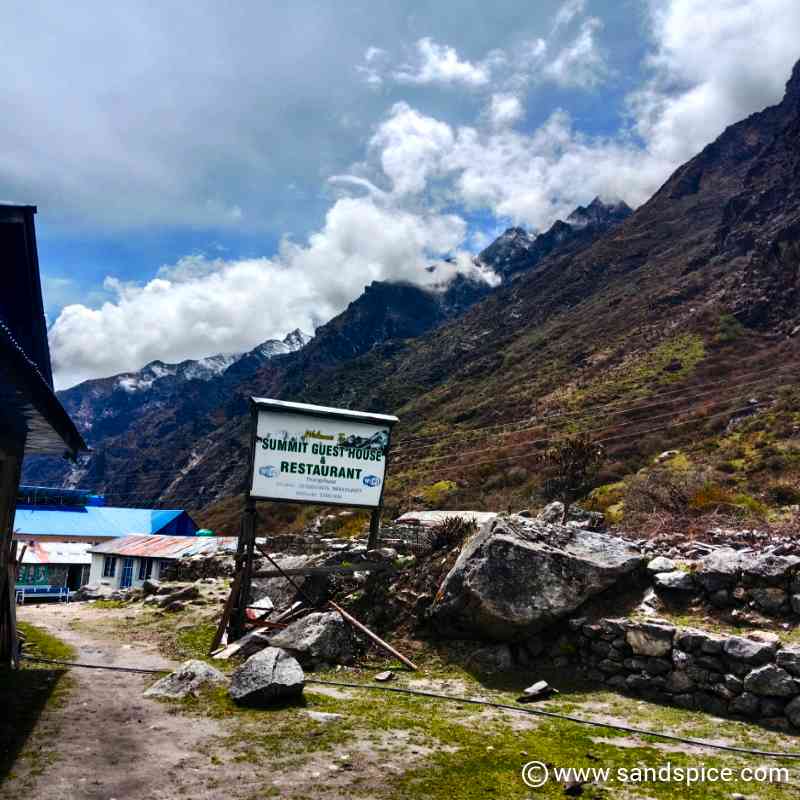
Thangsyap? Thangsgod!
🗺️ This article is part of our ongoing Langtang Valley Trek Series. Follow our journey ridge by ridge:
-
- ✅ Milestone 1,550m: Kathmandu Airport & the Road to the Langtang Trailhead
Navigating Arrivals, Visa-on-Arrival, temperamental ATMs, local SIM cards & the brutal 7-hour Jeep ride to Syabrubesi.
- ✅ Milestone 1,550m: Kathmandu Airport & the Road to the Langtang Trailhead
- 🥾 Milestone 2,480m: Into the Deep Gorges of the Langtang Khola
Transitioning from the humid, monkey-infested forests of the lower valley up to Lama Hotel and Thangsyap. - 🌲 Milestone 3,430m: Leaving the Tree Line at Langtang Village
The valley opens up into the alpine zone, passing the rebuilt village of Langtang. - ❄️ Milestone 3,830m: Acclimatizing at Kyanjin Gompa
Reaching the 3,900-metre mark where the air gets properly thin & the local bakery beckons. - 🎯 Milestone 5,000m: The High-Altitude Ridge Line: Tserko Ri Summit
The grand finale on the big Seven-Zero birthday. Standing at 5,033 metres for 360-degree views of Tibetan peaks.
If you like the Deep Gorges of the Langtang Khola, take a look at our other Tropical Travel Plans. You may also like:

Spice up your inbox…

… with discounted hotel deals, cost-saving travel itineraries and SandSpice escapades! 😉