


In the Philippines Karaoke is King 🎤
We’ve travelled a bit, seen a few things, and eaten some truly alarming street food, but nothing prepared us for the sheer, unrelenting auditory experience that is Filipino karaoke. In the heart of the Philippines, where the hospitality could thaw an iceberg, there exists a singular, booming truth: Music is not a background activity; it is a full-contact sport.
We arrived, ready for breathtaking islands and vibrant culture. What we got was an immediate, thorough, and often slightly off-key immersion into the melodious, yet merciless, kingdom where the microphone reigns supreme.
Where Karaoke is King, and the King of Karaoke is Sinatra.
Highlights
- A Culture of Bravura 🎵
- Karaoke Bars 🎤 Musical Hideaways
- Singing with the Locals 🤝
- Karaoke Competitions & Events 🏆
- Etiquette 🥳 Embrace the Noise
- No escape 😱 Karaoke Everywhere!
- All Hotel Options in Manila
- Experiences, Not Just Sightseeing
- Our Philippines Itinerary
- Overall Philippines Impressions
Culture of Bravura 🎵 Why Filipinos Sing Loudly
From the hectic, wonderfully mad streets of Manila to the genuinely tranquil landscapes of Palawan, karaoke isn’t merely a pastime; it’s practically a constitutional requirement.
Forget your quiet Friday evenings with a book. Here, the moment two people gather, someone is sizing up the nearest machine and calculating their vocal range for a power ballad.
In every corner of this archipelago, you find these steel-and-speaker behemoths, poised to transform a mundane Tuesday afternoon into a high-octane symphony of enthusiastic, if not always pitch-perfect, voices.
The locals don’t just enjoy this tradition; they embrace it like a long-lost wealthy uncle. It’s the cement that bonds families, the glue for friendships, and the default setting for any sort of gathering.
You can hear it—you will hear it—morning, noon, and night. A sonic tapestry woven from heartwarming ballads and energetic, slightly dated, pop hits.
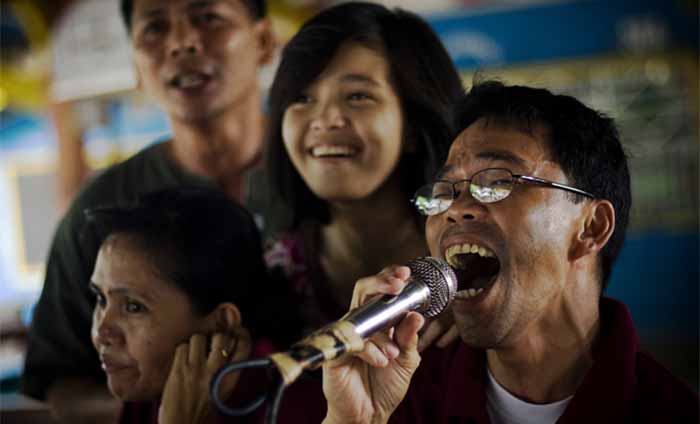
It’s the level of commitment that sets this place apart. This isn’t your shy, reserved British pub singalong after six pints. This is treated almost as a national sport, and it is taken very seriously indeed.
We would constantly hear some tone-deaf hopeful drawling out the lyrics to “My Way“ or belting out Jennifer Rush’s “The Power of Love“.
The sheer volume, the emotional commitment… it’s staggering.
Hunt for the Golden Mic 🎤 Inside the Karaoke Bars
Tucked away in the labyrinthine alleys of cities like Manila and Cebu, you’ll discover a glorious array of karaoke bars. They range from intimate, dimly lit nooks that smell faintly of stale beer and ambition, to vibrant clubs with flashing lights.

Each establishment has its own unique, slightly sticky atmosphere, but they all serve the same purpose: A safe haven for the vocally inclined. Whether you’re a shy crooner, clutching the mic like a life raft, or an enthusiastic vocalist ready to shatter some glass, these places welcome all.
- The Dive Bar Corner: Minimalist, often just a single machine in the corner of a sari-sari store, where the audience consists of the same three men drinking local rum. Intimate and intimidating in equal measure.
- The KTV Room: Private, air-conditioned rooms, like little soundproofed bunkers of melody. Ideal for when you genuinely know you’re going to be ear-splittingly terrible but still want to unleash your inner rock star. They are perfect for small groups who want to subject only each other to their high notes.
- The Beachfront Booth: Found near places like Alona Beach, these open-air setups allow you to truly croon your heart out while the sea breeze carries your melody away, ideally far out over the ocean so the tourists don’t complain.
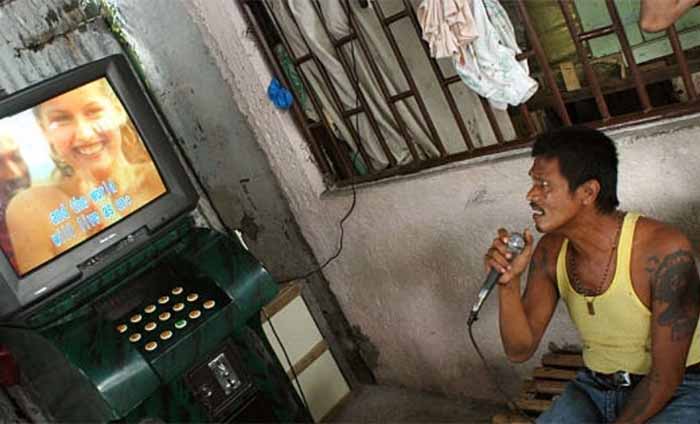
We found that the hotel-based options, while perhaps less authentic, did offer the benefit of slightly better soundproofing from the outside world.

Singing with the Locals 🤝 A Communal Embrace
Karaoke, we realised, transcends language barriers; it’s a universal declaration of intent. Nowhere is this more obvious than when you – the pale and slightly bewildered traveller – join a local session.
It’s not just an entertainment session; it’s an instant induction into an extended family gathering.
Strangers quickly morph into cheerleaders, offering unsolicited but well-meaning advice on your breathing technique and sharing the stage with a genuine warmth that defines Filipino hospitality.
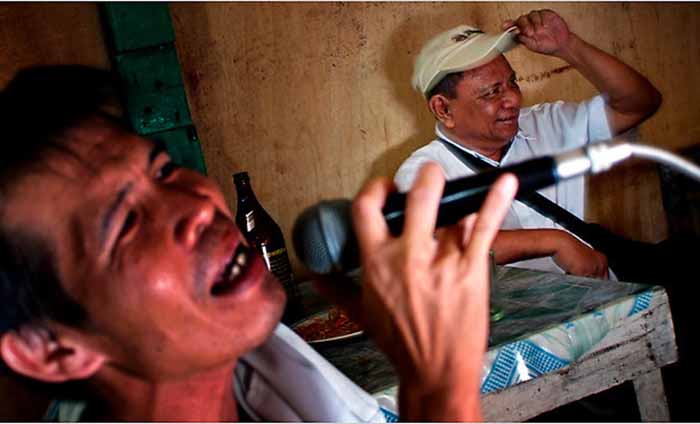
I remember attempting a hesitant rendition of an obscure 1980s synth-pop track, convinced I was about to be laughed out of the establishment.
Instead, a little woman who I assumed was the proprietor grabbed a second mic and joined me for the chorus, her voice a powerhouse that made mine sound like a whisper.
I had been adopted. It was humbling, heartwarming, and mildly terrifying.

The ‘My Way’ Menace 🏆 Competition & High Stakes🔪
The Philippines doesn’t merely sing karaoke; it takes it to the highest level of earnest, no-nonsense, competitive excellence. This devotion is fully on display during the numerous competitions and festivals.
This is not a casual Friday night pastime; this is a talent show with local implications.
- The Buy-In: The typical entrance fee is a symbolic but mandatory 5 pesos per song. You pay, you sing, you are judged.
- Automated Cruelty: The modern machines have an automated judging system that spits out a score. This little digital overlord does not care about your feelings or the fact that you’re jet-lagged. It cares only for pitch.
- The Prizes: Often, the stakes are delightfully low-key. Cash prizes, certainly, but sometimes the First Prize is simply a kiss on the cheek from a pretty girl (I’m told this is a serious incentive, though I declined to test the theory).
And then we come to “My Way.” That Frank Sinatra classic is, without a shadow of a doubt, the song most in demand. It’s a melodic battleground, a source of fierce pride, and, rather alarmingly, it’s been linked to the so-called “My Way Killings.”
Yes, you read that correctly. A series of fatal disputes, arising from the singing of this one song in karaoke contests. It’s usually over who gets to sing it, or, the mind-boggles, a reaction to a particularly egregious rendition of Ol’ Blue Eyes’ signature tune.
The irony of a song about forging your own path causing so many to have theirs abruptly shortened is a dark chuckle that only Filipino karaoke could provide.
My advice? If you find yourself involved in one of these high-stakes vocal showdowns, you might be advised to choose something a little less controversial. “Bohemian Rhapsody,” for example, is generally considered safe, provided you nail the operatic section (… ‘Galileo! Galileo!’).
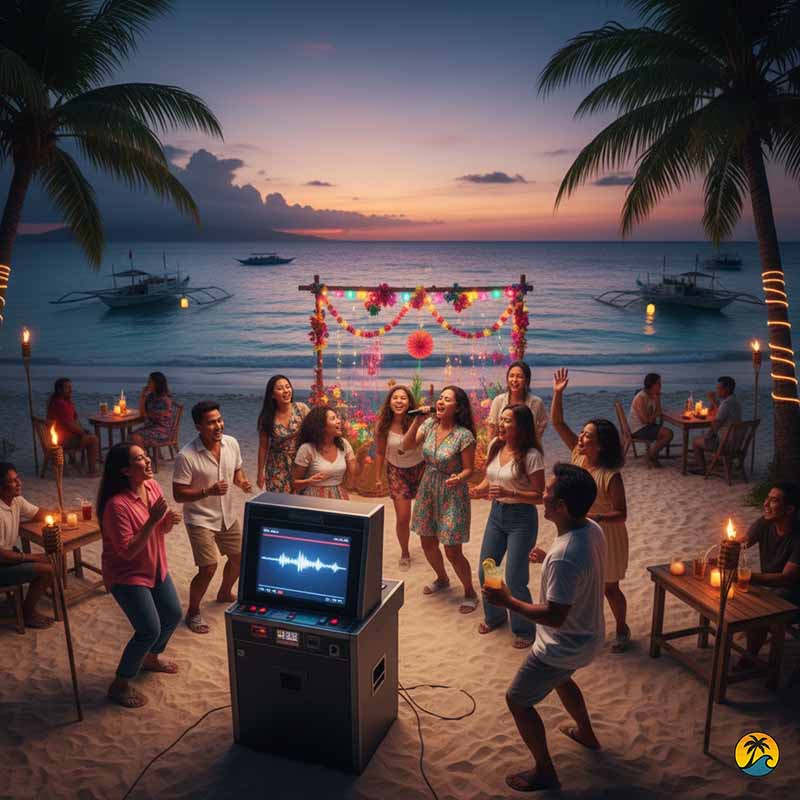
Etiquette & Acceptance 🥳 Embrace the Noise
For the uninitiated, navigating the world of Filipino karaoke might seem a bit daunting. It’s loud, it’s fervent, and there’s nowhere to hide. But there’s a simple, unspoken code of conduct that ensures everyone has a complete blast, even if their ears are ringing for a week:
- Don’t Be a Wallflower: Pick a song, grab the mic with conviction, and join the chorus. If you hesitate, you’ve lost.
- Volume is Your Friend: They like it loud. If you think you’re singing too loud, you’re not singing loud enough.
- Cheer Enthusiastically: Encourage everyone, even the bloke who sounds like a foghorn. It’s about the shared moment.
It isn’t about vocal perfection; it’s about embracing the sheer, glorious moment and sharing your love for music, regardless of how much your love for music may exceed your talent for music.

There’s No escape 😱 Karaoke is Everywhere!
As a visitor, you soon realise there is simply no escape from the ubiquitous karaoke machine. You check into a secluded beach resort, miles from anywhere, and the sound of someone massacring an Air Supply hit carries for huge distances across the open water.
And it’s not just the organised commercial ventures. Every other private house, it seems, has its own home karaoke system. They come equipped with speakers that look fit for a Metallica concert, and boy do they like to crank it up!.
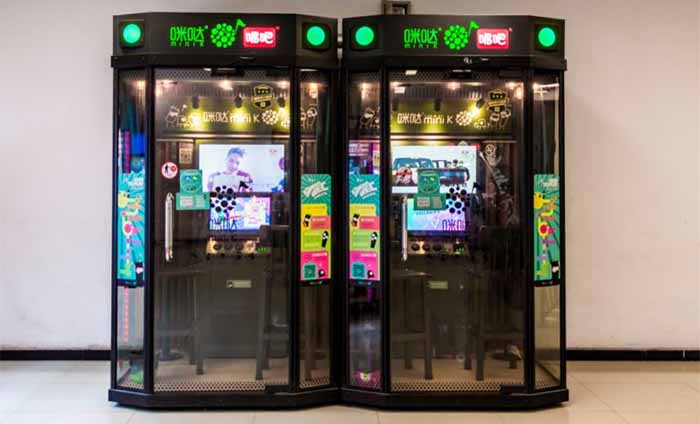
Need a quick fix? Here’s a karaoke booth
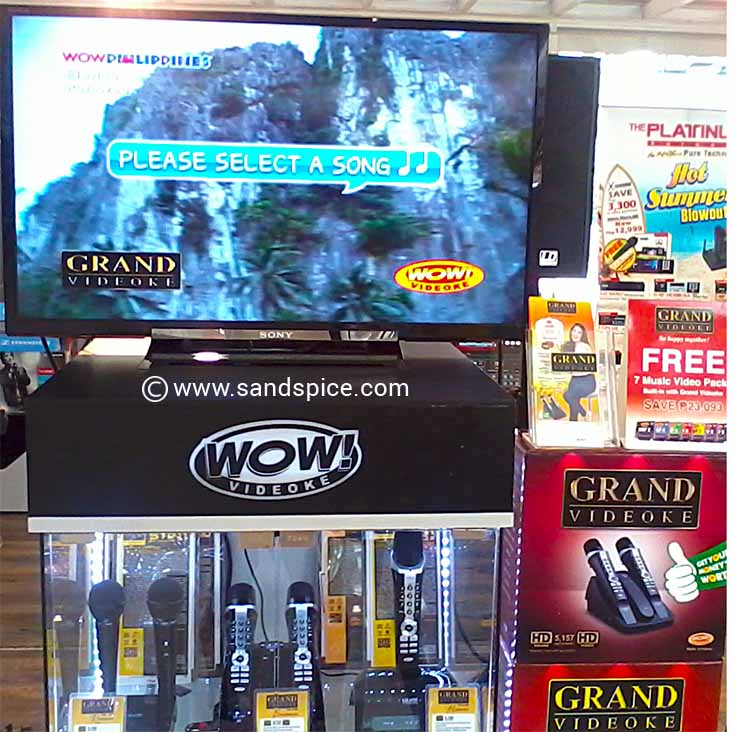
I saw a Grand Videoke home system demo in a mall; a sleek, imposing tower of sound with HD capabilities, starting from around 11,500 pesos (which is about €220).
Watching the woman demonstrate it—a perfectly ordinary shopper, suddenly transformed into a pocket-sized diva—I was sorely tempted.
What use do I have for such a thing in my little flat back home? Absolutely none. But the power! The sheer, unadulterated, noise-making potential!
The Philippines taught me that when life gives you a microphone, you don’t politely decline; you grab it, you select an emotionally charged song, you turn the volume up to eleven, and you sing as if the fate of the nation depends on hitting that high note.
It’s exhausting, it’s hilarious, and it’s utterly wonderful.
We left with a slight headache, a persistent ringing in our ears, and a profound respect for anyone who can confidently tackle a Whitney Houston song after a few San Miguels.
Now, if you’ll excuse me, I hear a faint, distorted cover of Livin’ on a Prayer coming from somewhere over the water… I feel a review coming on. 😬
If you enjoyed In the Philippines Karaoke is King, check out Central Philippines – Cebu & Bohol. You may also like:

Spice up your inbox…

… with discounted hotel deals, cost-saving travel itineraries and SandSpice escapades! 😉














1 Comment
Johnny
September 11, 2015at 8:31 pmIt’s always a pleasure to read this blog, because it’s a nice mix of very funny whining and wise thoughts. Well, I really think you should get off the touristy places and get back to the country side, you might get better singers! Keep going mate, take care – Ju