


Panama City to Santa Catalina by Bus 🚌 Tips, Schedules & Prices
Escaping the towering skyscrapers of Panama City for the raw Pacific surf of Santa Catalina sounds like a straightforward coastal getaway. On paper, it is a neat journey heading west along the Pan-American Highway before turning south towards the Veraguas coast.
In practice, executing this transit by local public transport is an exercise in patience, tactical seating maneuvers, and strict cash management.
Whether you’re heading out to ride the famous point breaks, catch a boat to Coiba Island National Park, or simply sink into a hammock with a cold Balboa beer, here is the complete, practical guide to making a smooth journey from Panama City to Santa Catalina.
Transit Breakdown ⏱️ Key Trip Logistics
Before diving into the fine details of terminals and turnstiles, here is the journey layout at a glance:
| Stage | Transport Type | Route | Duration | Approx. Cost |
| Stage 1 | Metro Line 1 | City Center ➔ Albrook’s | 15–30 mins | $0.35 |
| Stage 2 | Coaster / Xpress Bus | Albrook’s ➔ Soná | 4.5–5 hours | $10 to $12 |
| Stage 3 | Local Chiva Minibus | Soná ➔ Santa Catalina | 1.5 hours | $5 |
| Total | Combined Transit | Panama City ➔ Santa Catalina | ~7 Hours | $16 to $18 |
Step 1 🚇 Navigating Albrook Station & The Metro System
Every grand Panamanian overland journey begins at the Gran Terminal de Transporte de Albrook. It’s a sprawling, humming hive of human activity, located right at the tail end of Metro Line 1.

Albrook’s Terminal
Getting to Albrook
The cleanest way to dodge the capital’s legendary traffic jams is to hop on the underground. A single fare on Line 1 will set you back a staggering $0.35.
- The Transport Card: You can buy a metro card in all metro stations for $2. However your card will have no credit. You’ll need to charge it up with a few dollars at the same machine. You need to use the card both on the metro and the bus – cash is not accepted. We found that each metro trip cost us 35 cents – bus trips are slightly cheaper at 25 cents.
- Sharing Fares: If you are traveling as a pair, one card does the trick. Tap it, pass it back over the barrier to your companion, and tap again.

Albrook Metro Station
Navigating the Terminal
Crossing the covered footbridge from the metro station brings you directly into the terminal proper. It’s surprisingly organized, featuring two endlessly long rows of ticket windows with destinations clearly painted overhead.
- Buying the Ticket: Head for the Transportes San Isidro booth to secure your ticket to Soná. Expect to pay around $11.00.
- The Exit Tax: Before stepping onto the departure concourse, you must pass through a turnstile that deducts a minor boarding fee (roughly $0.25) from your transport card.

San Isidro bus to Soná
Step 2 🚌 The Long Haul: Panama City to Soná
There is no direct coach running all the way into the sleepy streets of Santa Catalina. Everyone—regardless of budget or travel philosophy—must change vehicles in the regional transit hub of Soná.
Bus Conditions & Onboard Rules
The primary leg out of Albrook is usually served by a mid-sized Coaster or standard long-distance bus.
- The Arctic AC: Panamanian bus drivers treat air conditioning as a personal competitive sport. Expect cabin temperatures hovering somewhere close to freezing. Keep a jumper or light jacket in your hand luggage unless you enjoy shivering in shorts for five hours.
- Luggage Rules: Rucksacks and suitcases are unceremoniously stowed in the lower luggage hold. Keep passports, money, cameras, and fragile items with you in a small daypack.
- Stow your Firearms: You’ll notice plenty of signs around telling you that guns are not allowed on the buses. You probably aren’t allowed to smoke either, though I didn’t see any signs about that.

San Isidro bus to Soná
Our bus wasn’t very modern, but it did have airco, and comfortable seating. There were no toilets onboard. However, the 4½ hour journey is broken after 2 hours with a 15-minute bathroom-stop.
Step 3 🚐 Soná Connection & Final Stretch to Santa Catalina
Arriving at the Soná bus stop drops you out of your air-conditioned bubble and straight onto a sunny, unpaved patch of ground that serves as the local transport hub.
The Vehicle Swap
Here, you make the leap from the coach to a much smaller local chiva (a mini-bus or converted pickup).
- The Seating Dash: Everyone from your bus will attempt to squeeze into a vehicle roughly half its size. When the luggage doors pop open, retrieve your gear sharpish and secure a seat on the waiting minibus before the best spots disappear.
- Roof Storage: Extra baggage gets hauled up to the roof rack and strapped down under a tarpaulin. Make sure nothing glass or crushable (or valuable) is sitting near the top of your pack. Items can sometimes ‘go missing’.
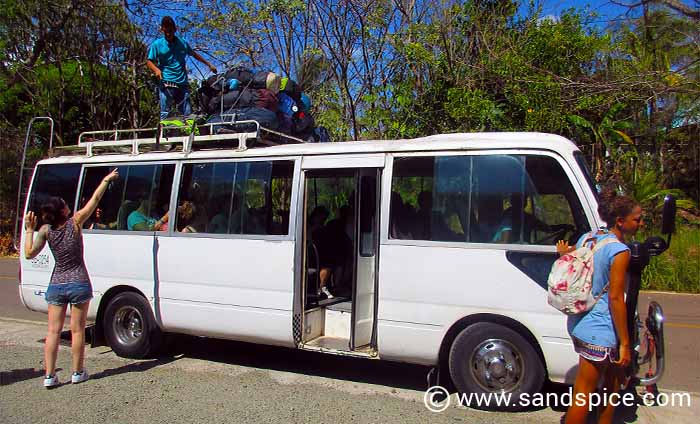
Bus from Soná to Santa Catalina
The Route into Santa Catalina
The 90-minute rattle down to the coast takes you through rolling farmland and quiet rural outposts.
- Getting Dropped Off: The driver doesn’t follow a rigid terminal protocol in Santa Catalina—he simply drives down the main strip. Keep an eye out for your guesthouse or hotel, shout out when you see it, and he’ll pull right up to the gate.
- Paying the Conductor: The fare for this final leg is around $5.00, collected in cash when you climb out at the end.
We had booked to stay 3 nights at the Iguanito guesthouse, close to the center of Santa Catalina. We’d be staying for three nights before heading west again to David, and then onwards further north to the highlands of Boquete.
Travel Tips 💡 What to Know Before You Go
1. Cash is King in Santa Catalina
If you take only one piece of advice away from this guide, let it be this: there are no ATMs in Santa Catalina.
- The Last Cash Stop: The absolute final operational ATM on this entire route is in Soná (1½ hours away from Santa Catalina).
- Daily Expenses: While one or two larger surf resorts might take plastic (usually with a stinging transaction fee attached), local eateries, small grocers, boat captains, and island national park fees operate exclusively on greenbacks.
Stock up in Panama City or Soná… or prepare to wash dishes.
2. Coiba Island Day Trips
Santa Catalina serves as the main launching pad for day trips out to Coiba Island National Park an exceptional marine reserve famed for pristine snorkeling and shark encounters.
- Park Entrance Fees: Foreign visitors must pay an official park entry fee (currently $20 per day), which must be paid in cash to your tour operator or the park rangers.
- Booking Ahead: During the dry season (December through April), secure your boat slot with a local dive shop or captain at least a day in advance.
3. Alternative Travel Options
If wrestling with bus schedules and luggage transfers feels too much like hard work, you have a couple of backups:
- Private Tourist Shuttles: Door-to-door shared vans run between Panama City (or Boquete) and Santa Catalina. Fares generally run between $35.00 and $50.00 per person, sparing you the bus swap in Soná.
- Self-Drive: Renting a car gives you full freedom along Route 1 to Santiago, turning off toward Soná and taking Route 42 straight to the coast. The road is fully tarmacked, though local speed bumps (muertos) occur without warning.
If you enjoyed Panama City to Santa Catalina, check out our Panama Roundtrip. You may also like:


Spice up your inbox…

… with discounted hotel deals, cost-saving travel itineraries and SandSpice escapades! 😉















2 Comments
sarah
atThanks for this! I was wondering, did you find you needed to buy tickets in advance to save your seat or were you able to buy them day of?
SandSpice
atWe didn’t buy tickets in advance – we bought them in the bus station shortly before departure. The bus wasn’t full, and we had a good choice of seating. As far as we’re aware, there are no reserved seats on this bus route.